Cannábicos

A visual journey into how Colombia is redefining its bond with cannabis—shifting from decades of stigma and prohibition to a future of activism, medical use, and cultural acceptance.

2023 – on going

‘Cannábicos’ is an ongoing visual project that delves into the evolving relationship between Colombian society and cannabis, in the context of the post-50 years of the war on drugs era. This conflictive era began with the targeting of the cannabis plant and its by-products.

Colombia has been a prominent producer and exporter of cannabis, with its peak illegal production and exportation occurring during the 70s and 80s, an era known as the ‘Bonanza Marimbera.’ Over the years, Colombian attitudes toward cannabis have transformed considerably.

Since 1986, individuals have had the freedom to cultivate up to 20 cannabis plants in their homes. Since 1994, personal use of cannabis has been legally permitted. The legislative landscape further evolved in 2016 when Congress approved its medical use, and there are ongoing discussions about the potential for adult-use cannabis sales.

Colombia has witnessed a solid cannabis activism movement in the last decade. Numerous events and collectives have emerged to encourage responsible consumption, educate the public about the plant’s therapeutic properties and promote self-cultivation.

‘Cannábicos’ seeks to understand the evolving landscape of cannabis in Colombia, with a focus on activists and initiatives dedicated to redefining the diverse uses of the plant, which stigmatization led to a failed war.

The rapper Uberman Cortés, also known as “Oberforty,” 35, smokes weed during an event titled “Reggae Roots and Flowers,” which promotes cannabis ventures and reggae music. The event was organized by “La Palma Gang,” a collective supporting the marijuana industry and trade, in Palmira, Valle del Cauca, on July 8, 2023.
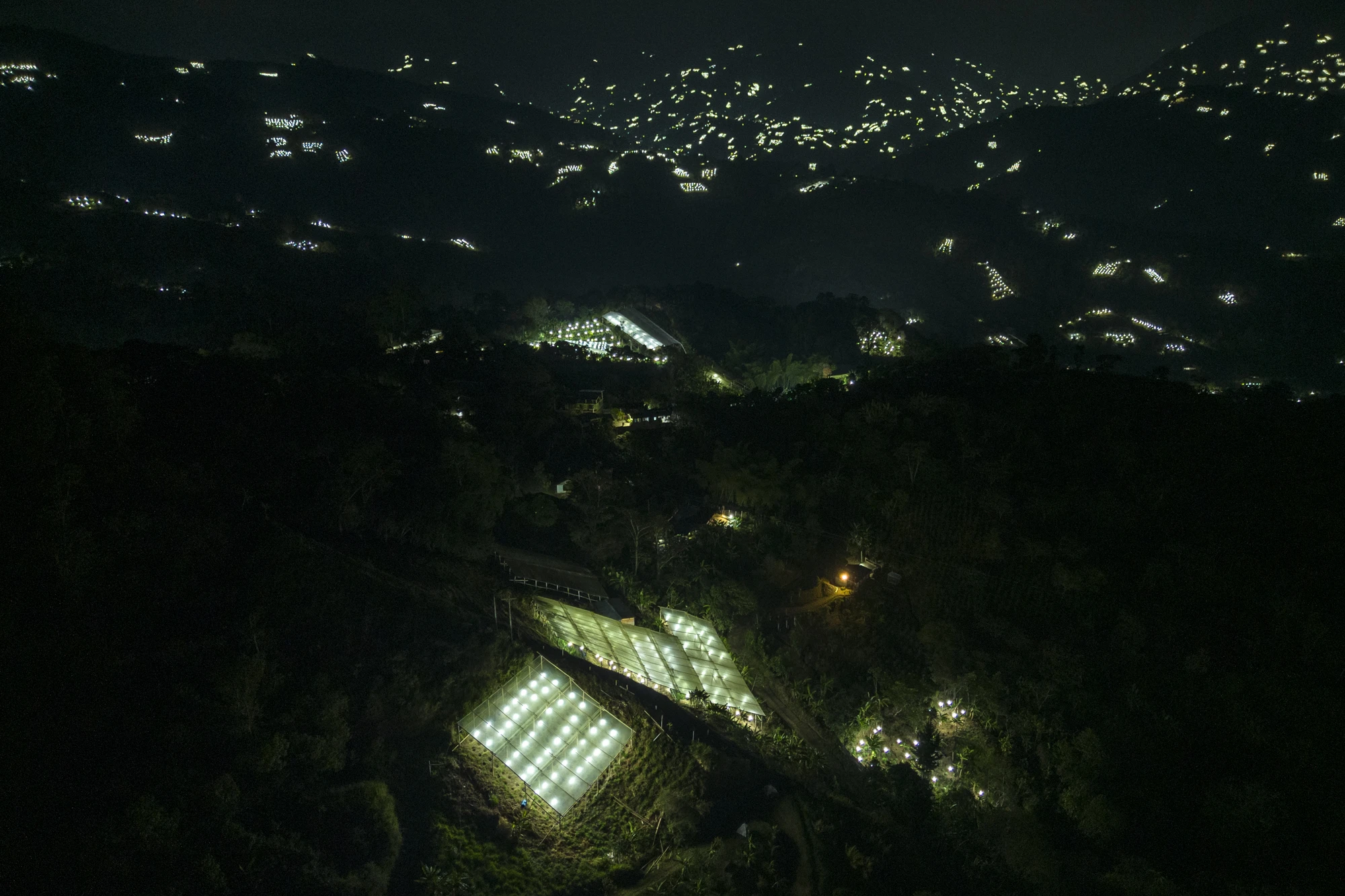
Marijuana crops illuminate the mountains of Toribío, in northern Cauca, at night on August 15, 2023. The cycles of light and darkness are essential for the plants’ growth. The growers’ union, representing around 16,000 farming families, spans the municipalities of Jambaló, Toribío, Caloto, Corinto, and Miranda.
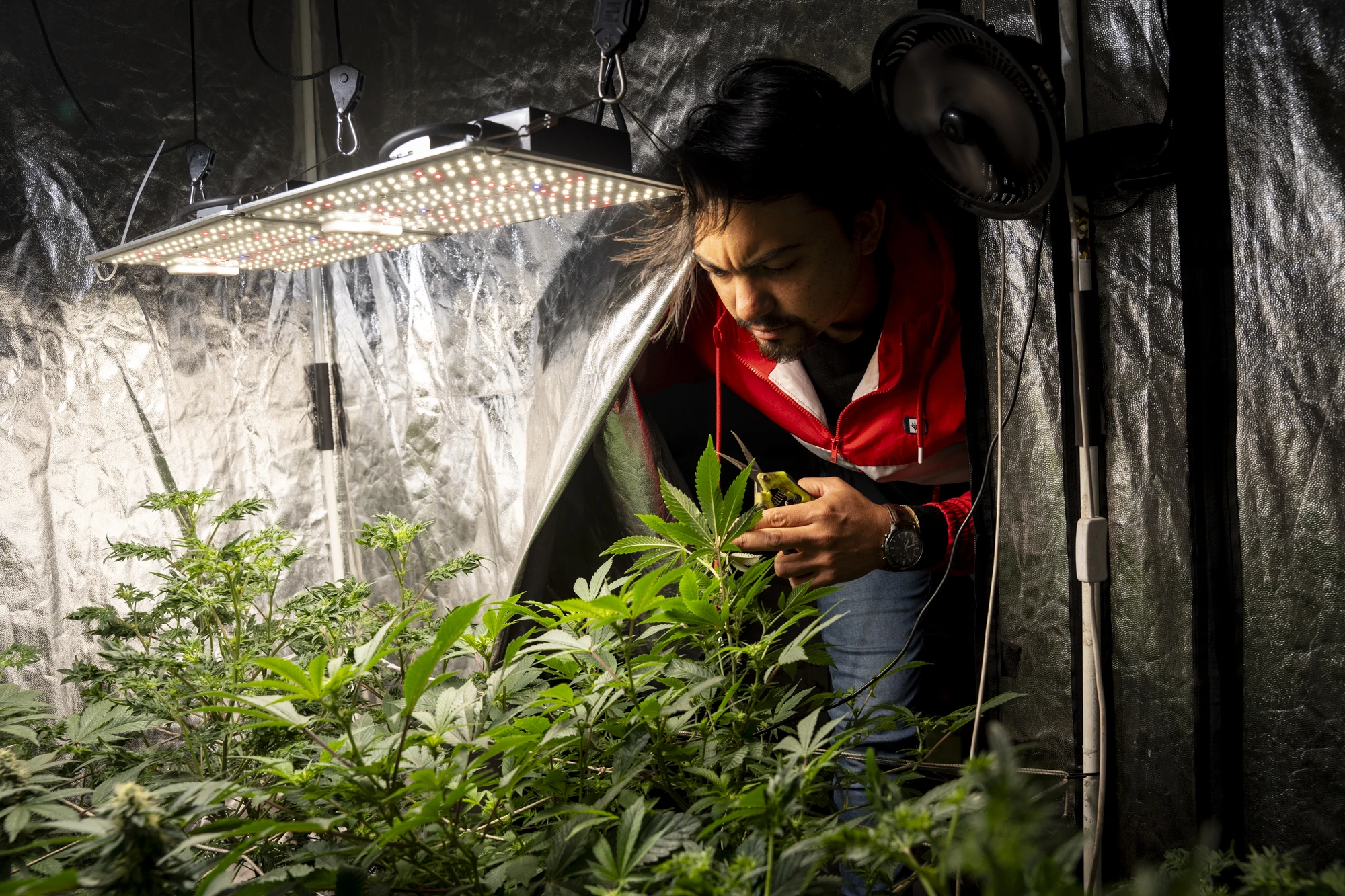
Omar Benavidez, an electrical engineer, trims cannabis plants with scissors in Bogotá on November 15, 2024. Benavidez owns an automated home cannabis growing system, which he rents to consumers seeking high-quality flowers.
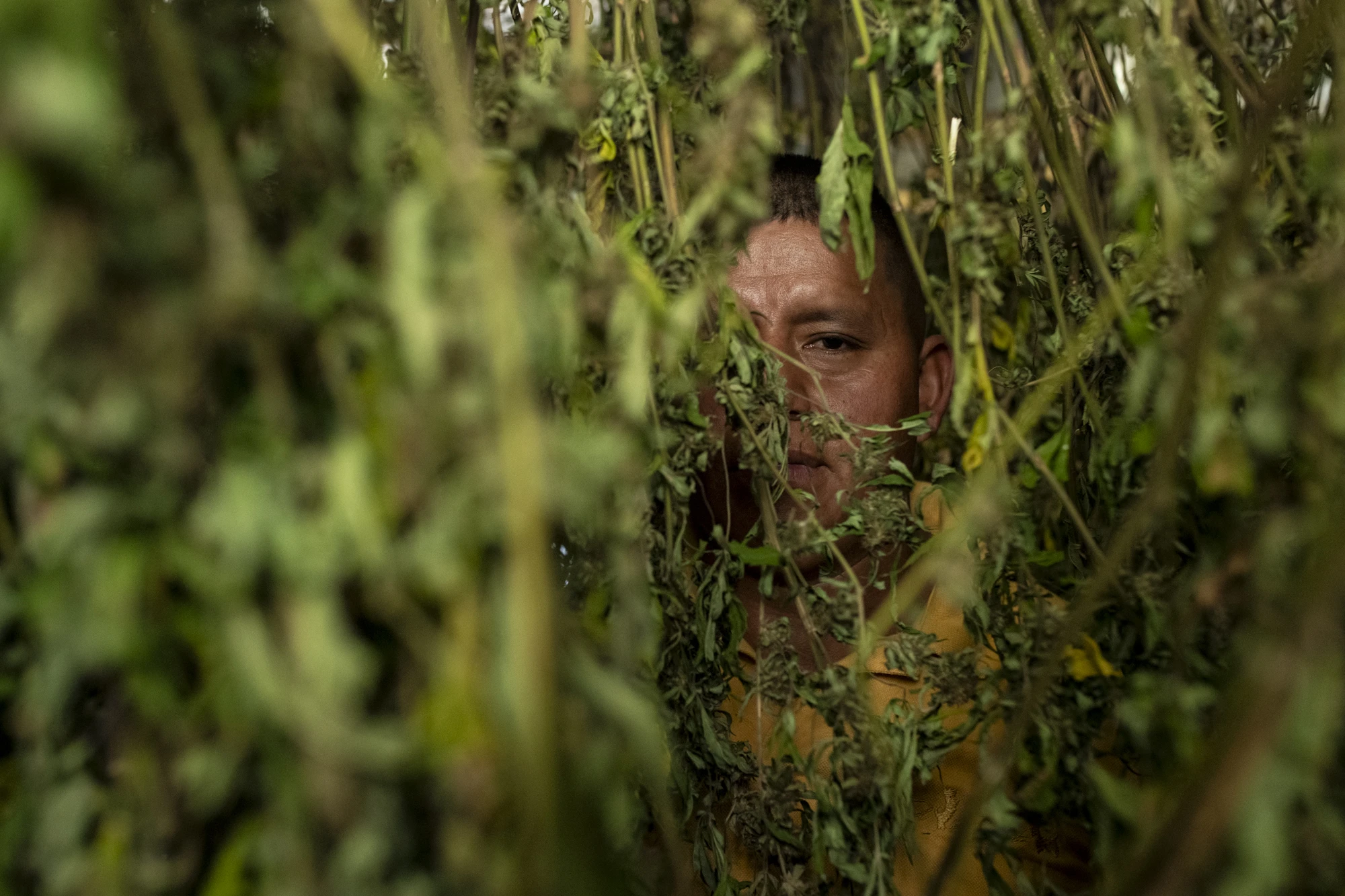
Carlos Ul, a cannabis grower, poses for a portrait inside a cannabis drying shed in Caloto, northern Cauca, on February 9, 2024. “We turned to cannabis cultivation because of the lack of opportunities and support. When you try to get a loan, they demand countless requirements—whether it’s for cattle or coffee—you end up giving your life to a bank. Cannabis became our chance to sustain ourselves as farmers,” Ul explains.
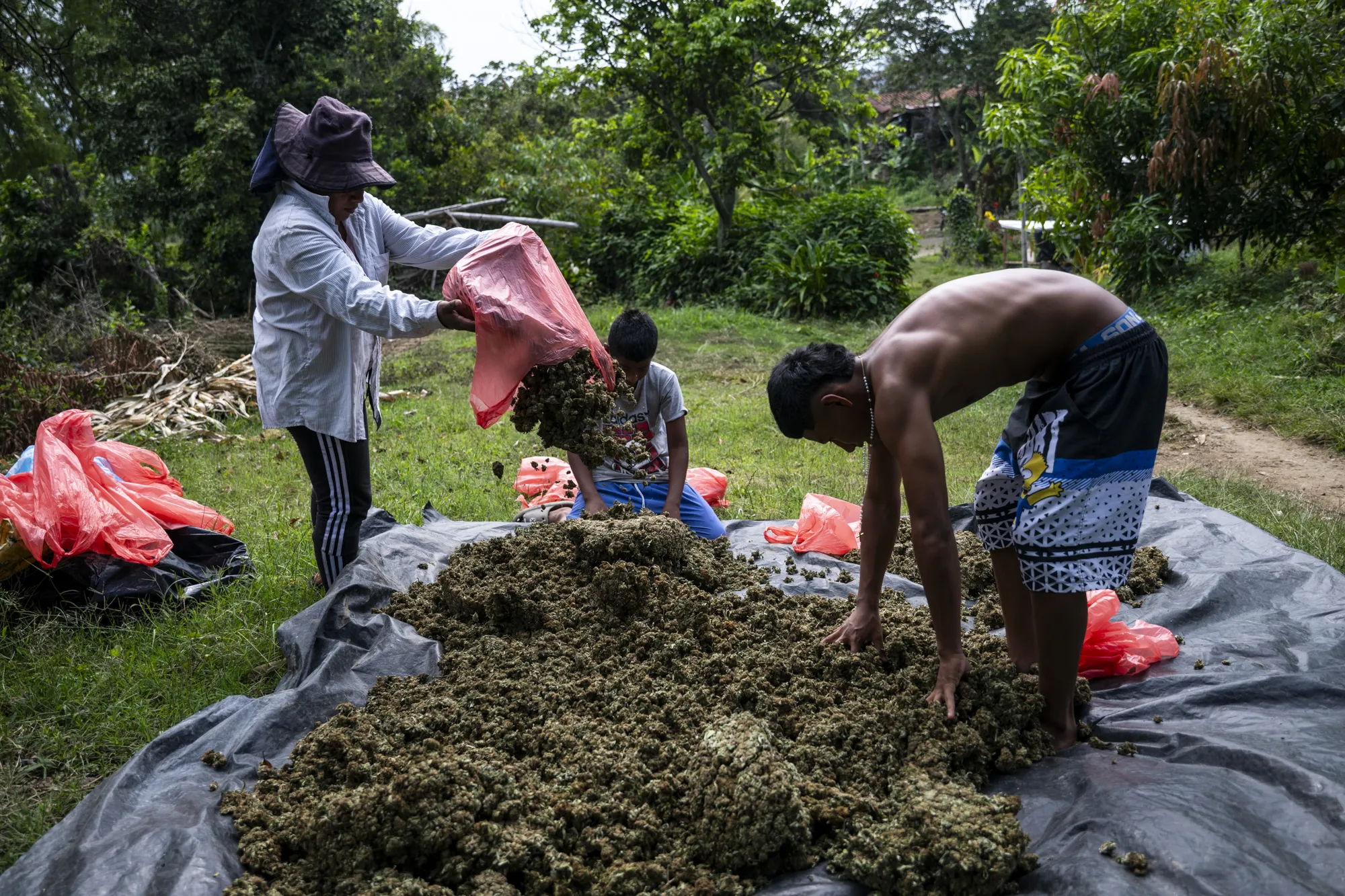
A woman and two young men shred marijuana buds on a farm in Caloto, in Colombia’s Cauca department, on Feb. 9, 2024. Despite its illegality, cannabis has become a vital source of income for farming families, often yielding higher profits than traditional crops.
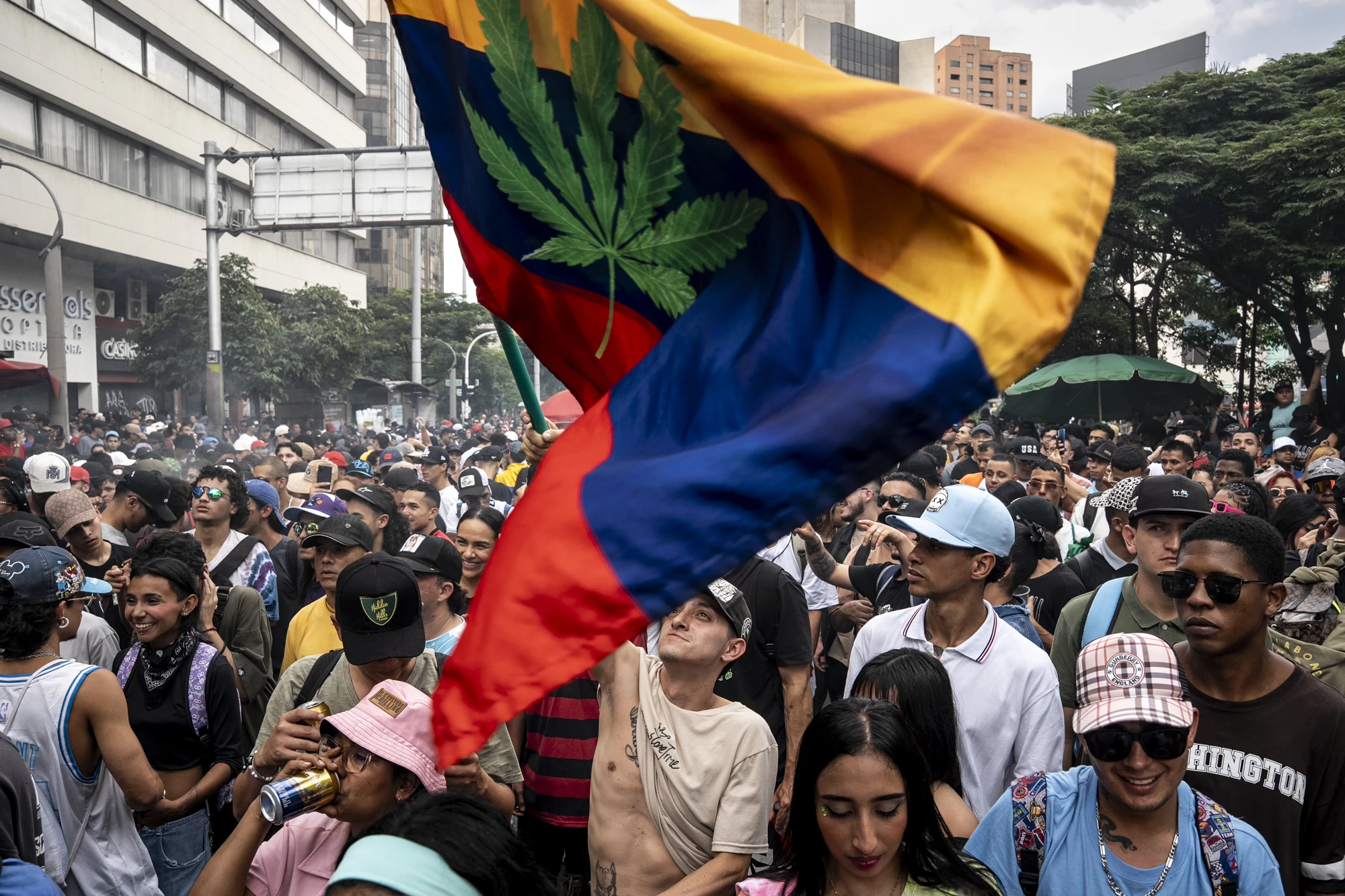
Cannabis consumers and activists gathered for the International March for the Legalization of Marihuana in Cali, Colombia, on May 3, 2025.
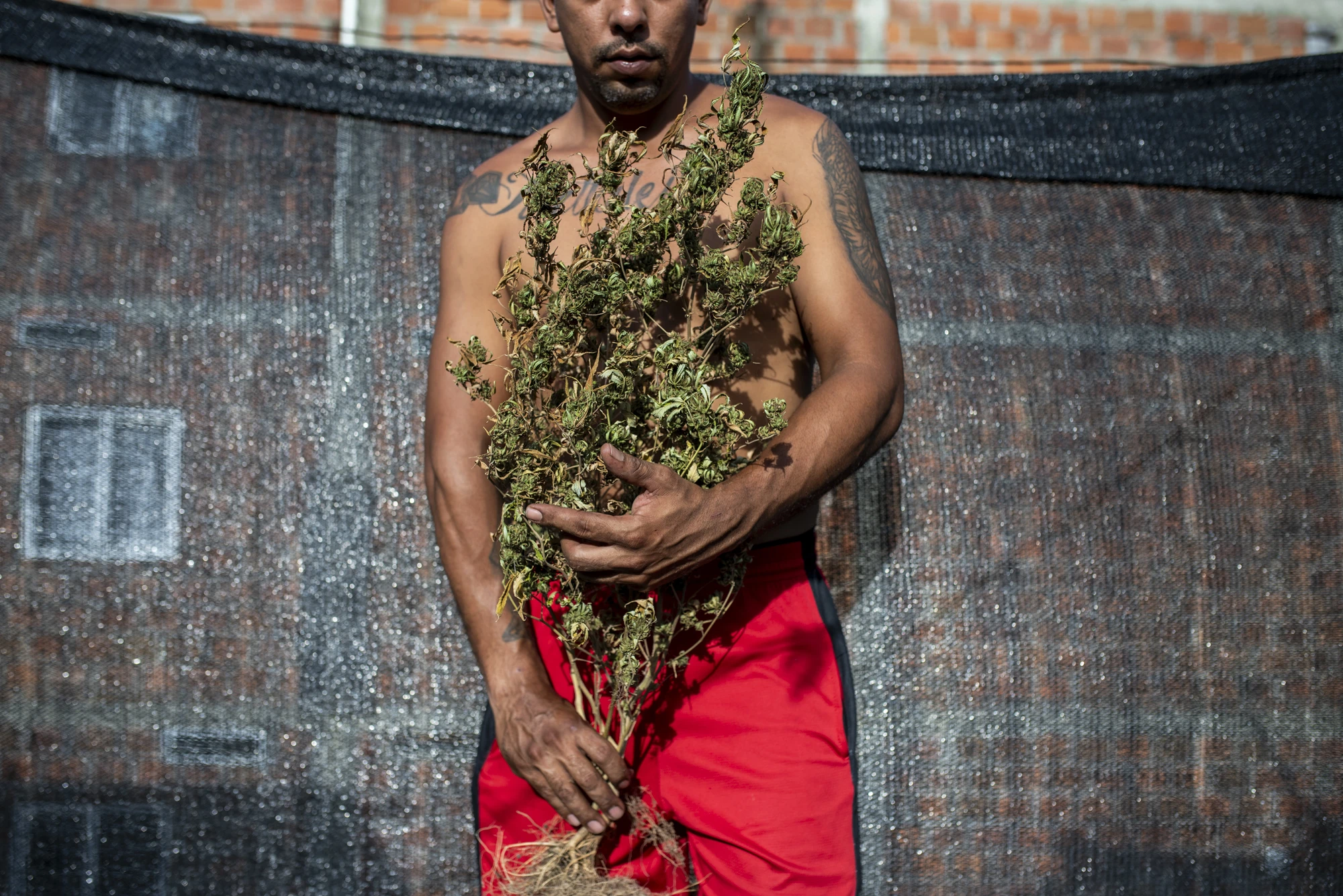
Jonathan Prieto, 35, holds a bouquet of dried cannabis. Prieto also teaches classes on self-cultivation among the consumer community in Cali, Colombia. “The body has an endocannabinoid system and if cannabis is inside us, it is for a reason. That’s why it has several opportunities to improve our health, because it not only has psychoactive properties, but also medicinal,” Prieto says.
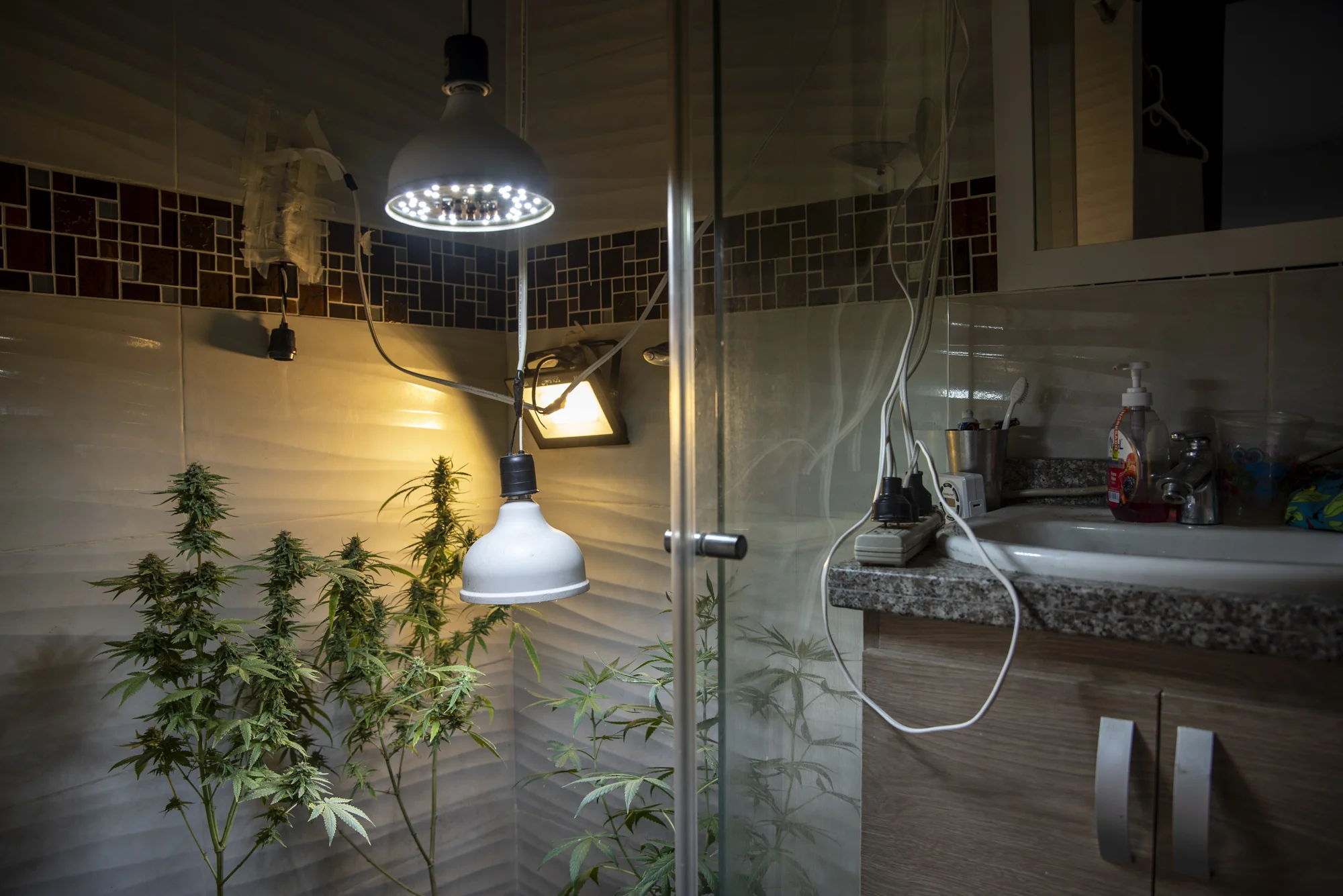
A self-cultivation cannabis set kept by activist Sebastián Ángel Gómez inside his bathroom in Cali, on May 13, 2023. In Colombia, it is legal for individuals to grow up to 20 cannabis plants at home.
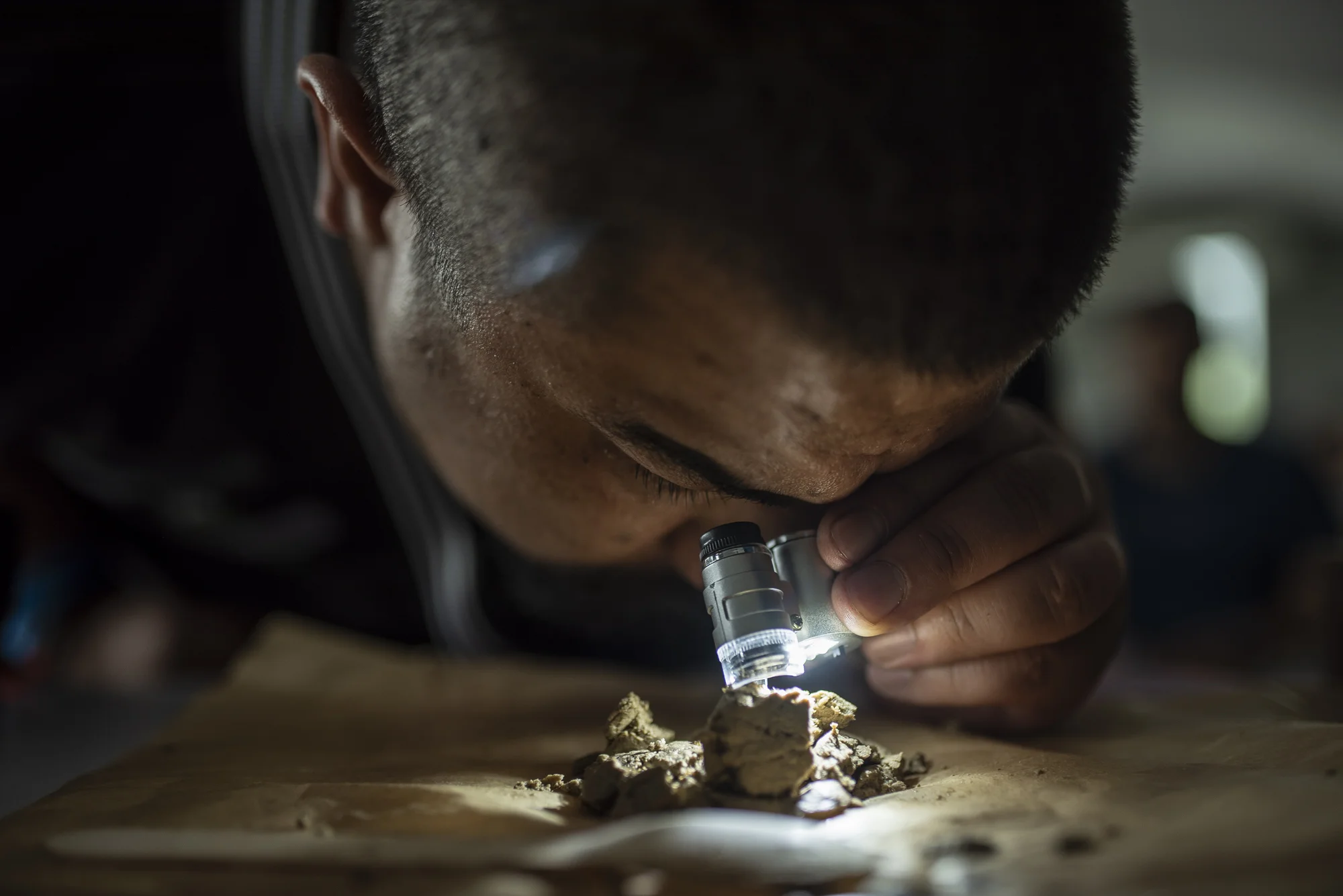
Jonathan Prieto sees a hashish paste through a jeweler’s magnifying glass during a workshop by Copa Farallones, an event to promote the culture and entrepreneurship around cannabis, in Cali, on July 26, 2023.
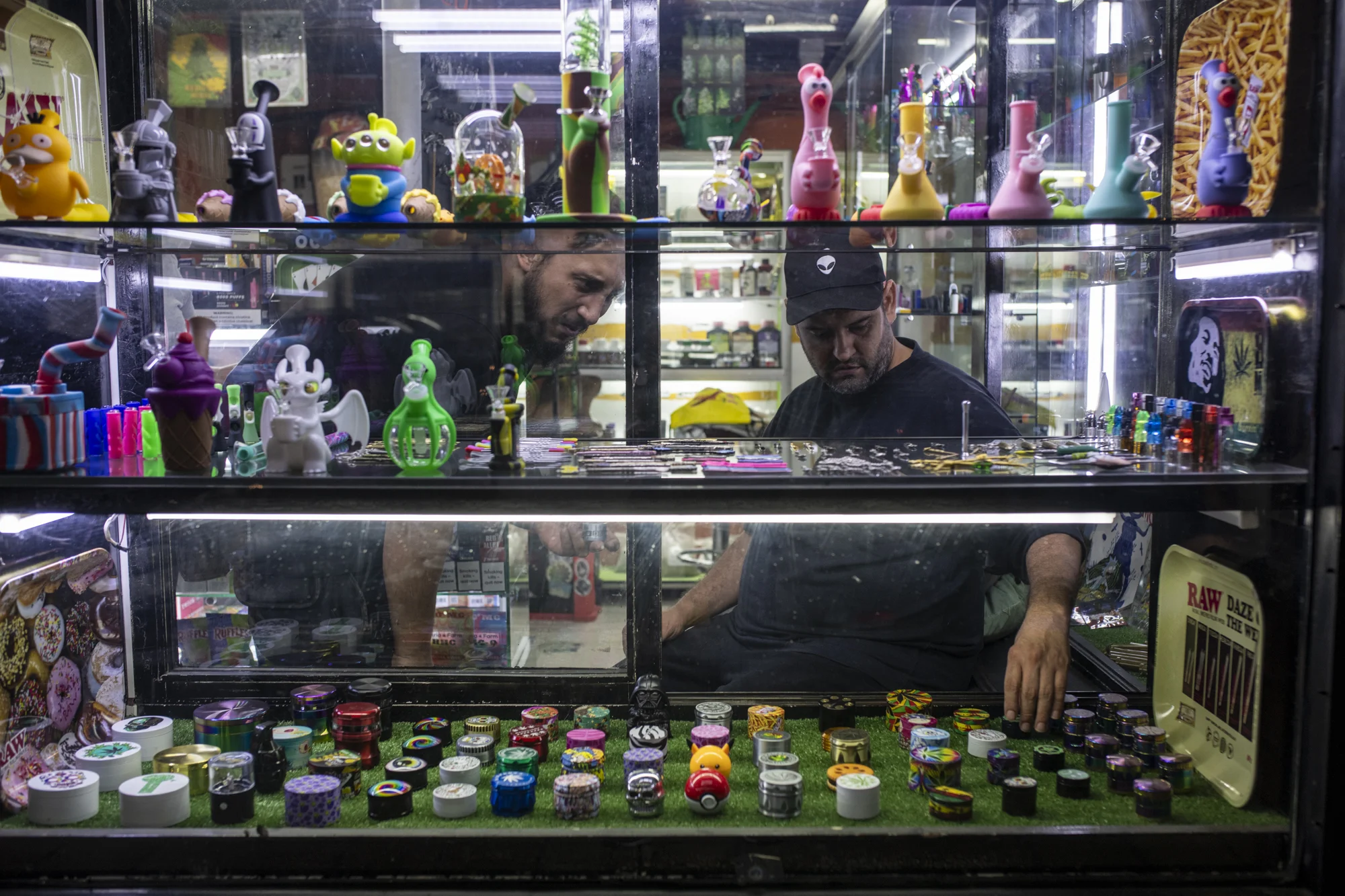
Fernando Henao (right) attends to a customer (left) inside his grow shop, UFO, where paraphernalia for cannabis use is sold, in Cali, on December 28, 2024.
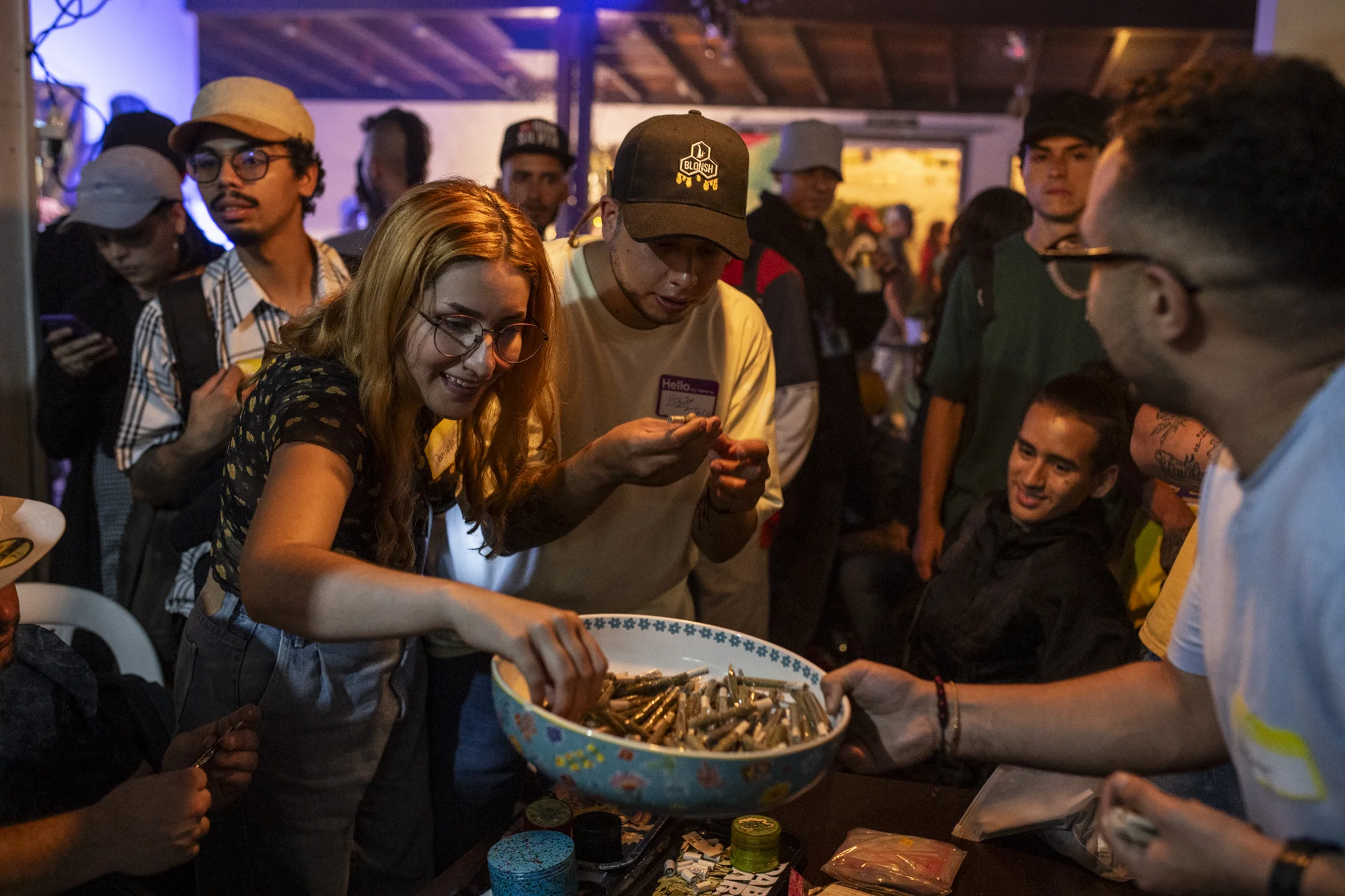
Daniela Ocampo picks a joint from a tray during the San Canuto, an event to celebrate the cannabis culture that was born in Spain in 1979 and was first held in Colombia in the city of Medellin, on January 19, 2024.
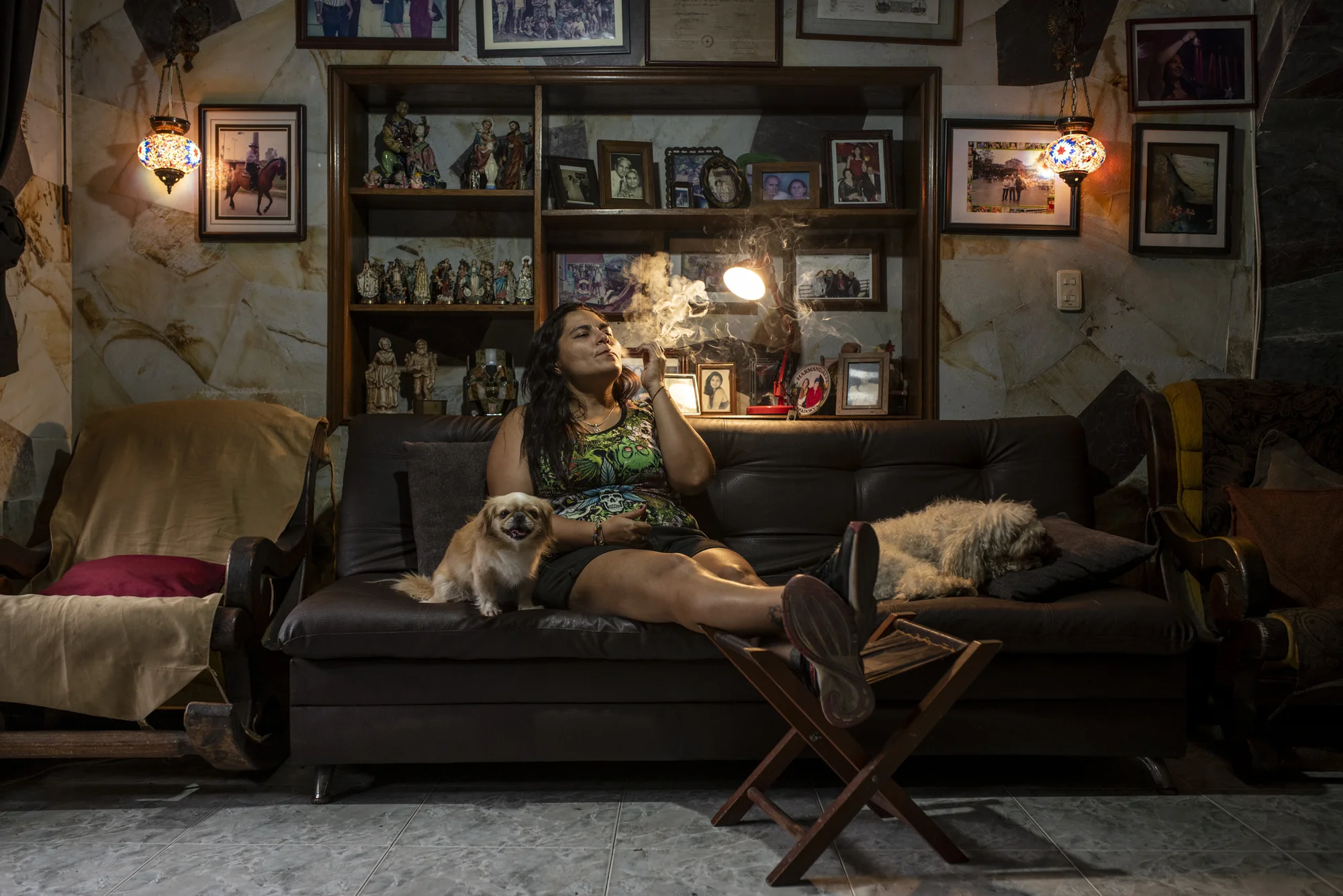
“Pola Dipe,” a 40-year-old criminal lawyer, smokes weed at her home in Cali on May 15, 2023. “The approval of adult marijuana use would enable growers to sell their high-quality flower to those unable to grow their own. Additionally, regulation would guarantee product quality, whereas micro-trafficking often involves items of dubious origin,” says Pola Dipe.
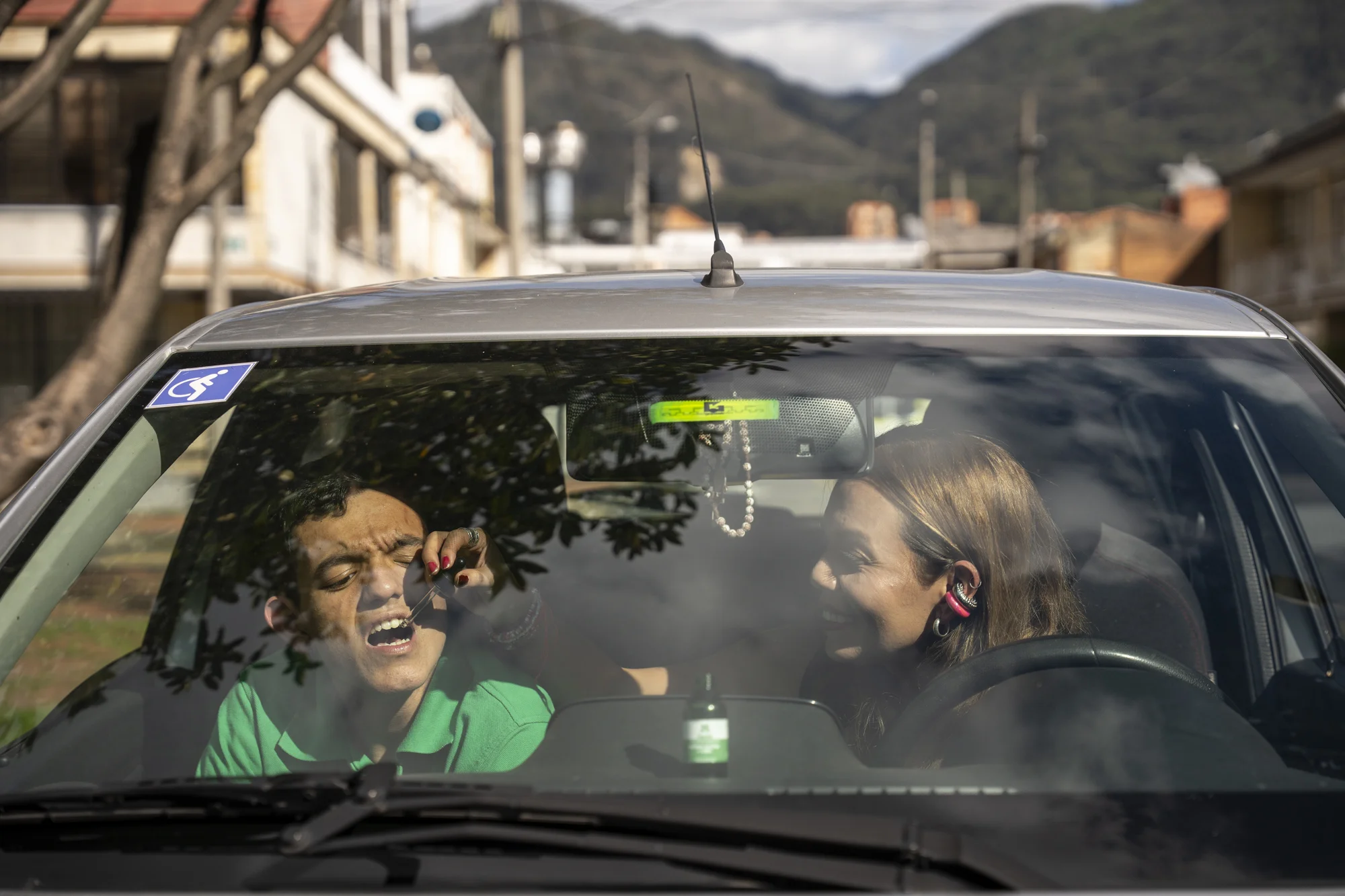
Carolina Cuervo, lawyer and medical cannabis entrepreneur, gives a cannabis infusion to her 18-year-old son Daniel, who has refractory epilepsy and cognitive delay, inside her car in Bogotá on November 18, 2024. “I’ve been told I’m a bad mom for defending the plant, but Daniel is a different person since I started using cannabis to treat his seizure crises, which were resistant to traditional medications,” says Cuervo.
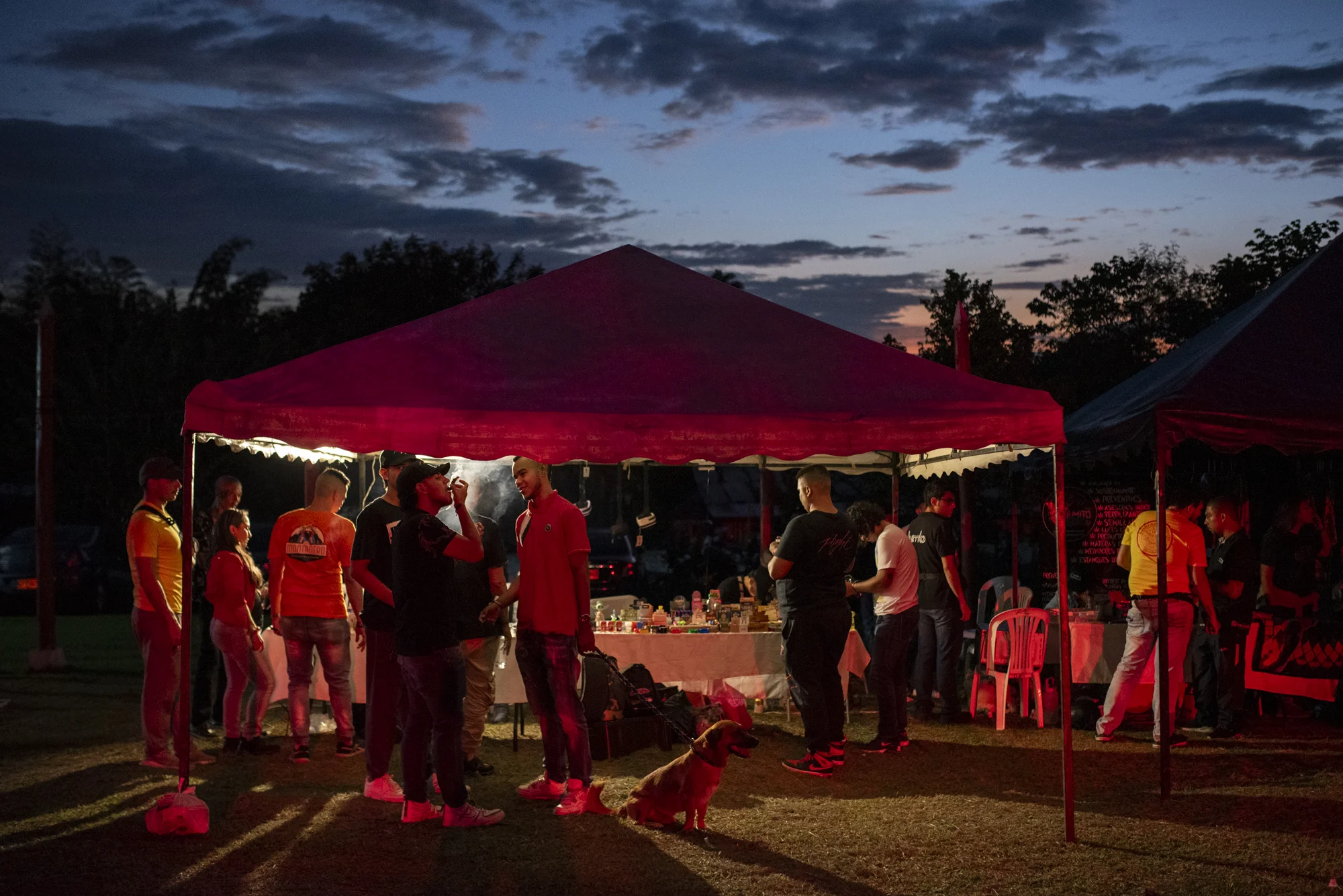
A man smokes weed in front of stalls selling items for consumption—such as pipes and grinders—during an event about cannabis and reggae organized by ‘La Palma Gang’ in Palmira, Colombia, on July 8, 2023. At events like these, marijuana is shared and gifted, as its sale and purchase remain illegal in the country.
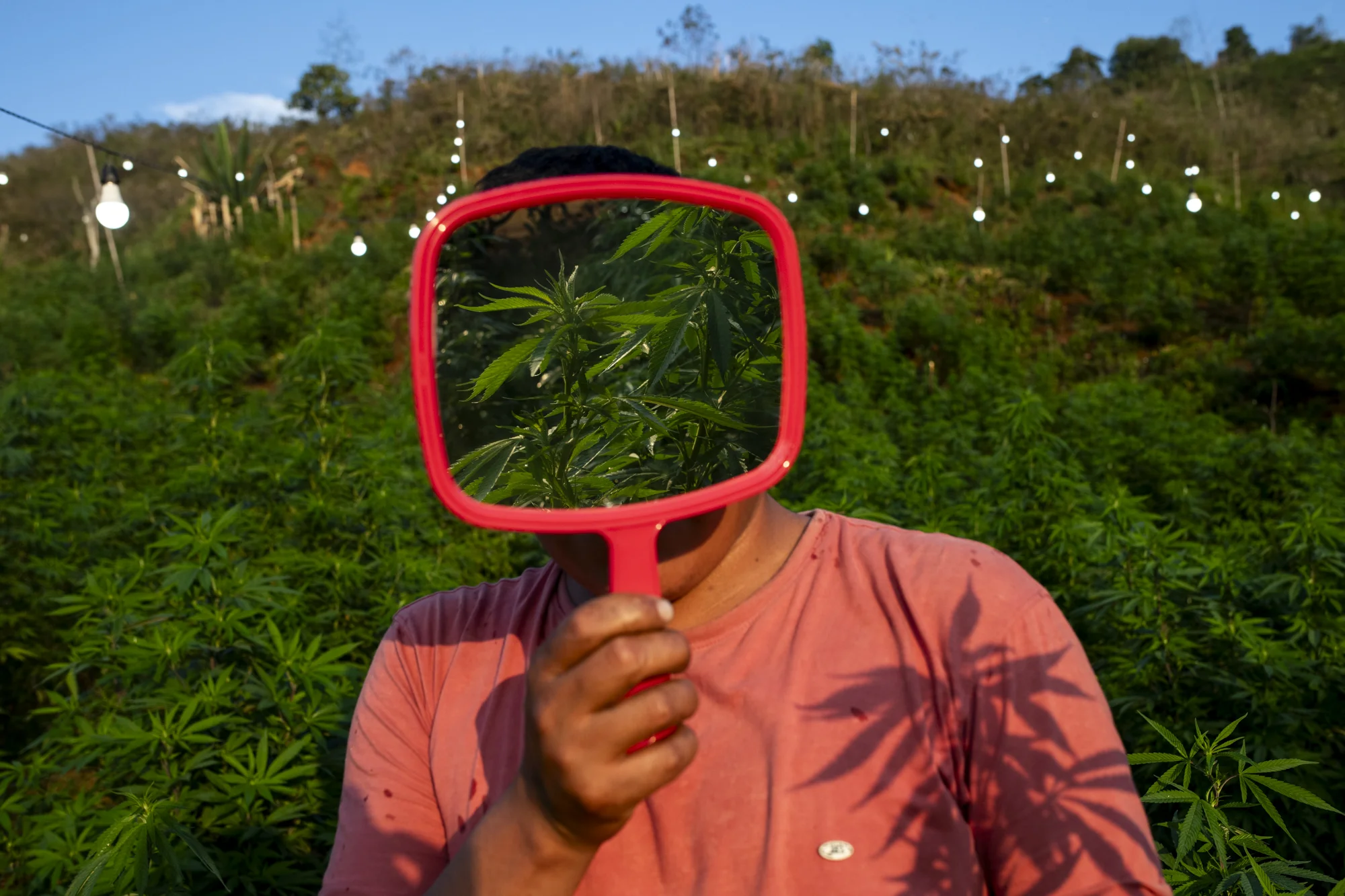
A grower covers his face with a mirror amidst a cannabis crop in Caloto, northern Cauca, Colombia, on February 9, 2024.
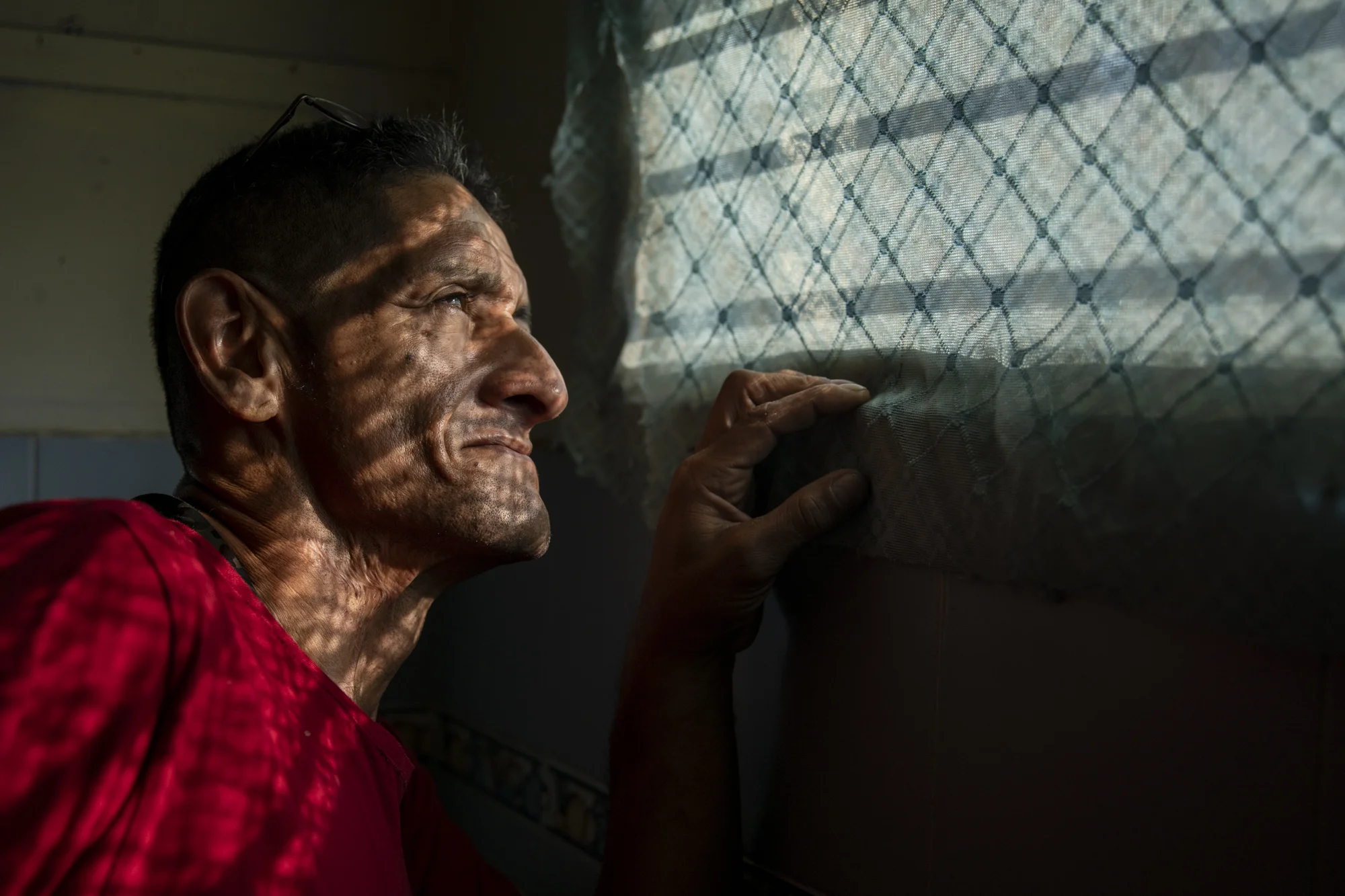
José Duván Villa, who was imprisoned twice for selling and transporting marijuana, looks out of a window of his home in Cali on January 25, 2024. At that moment, there were more than 11,000 men and 1,700 women in Colombian prisons for drug trafficking, manufacturing, or possession.

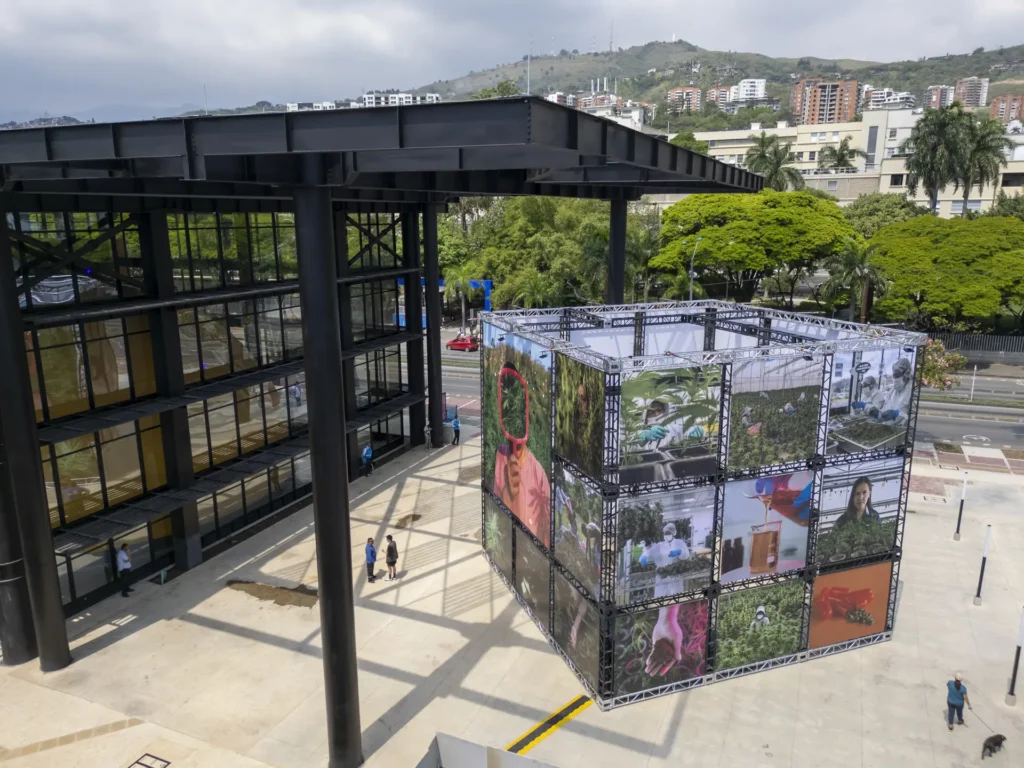
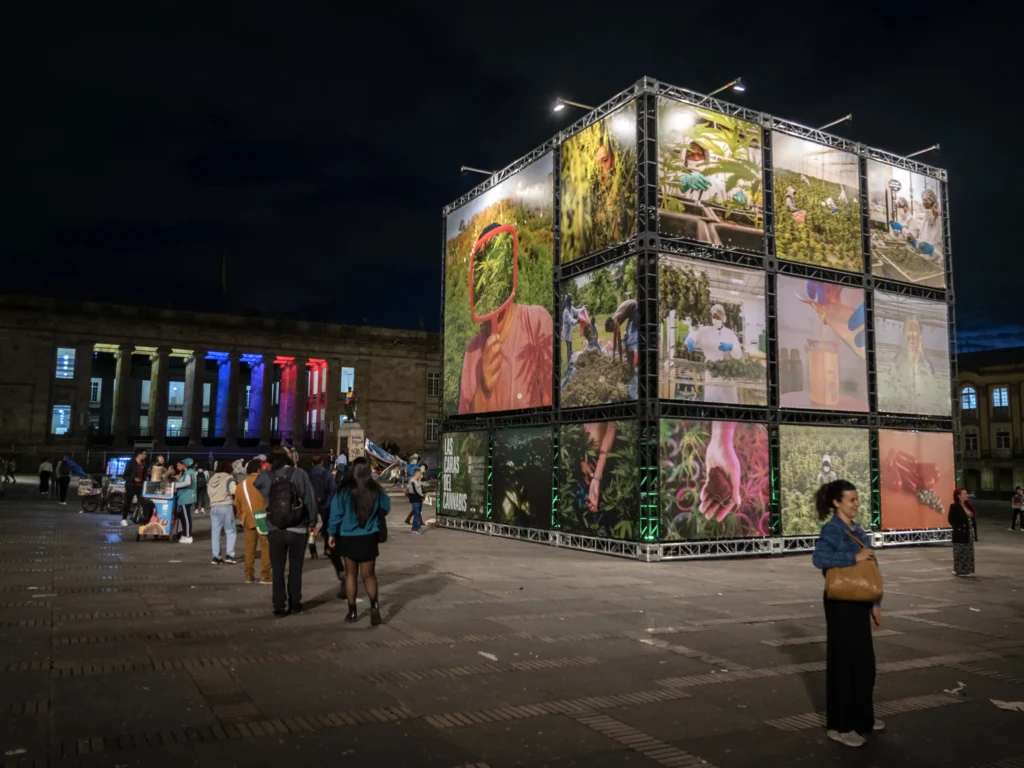
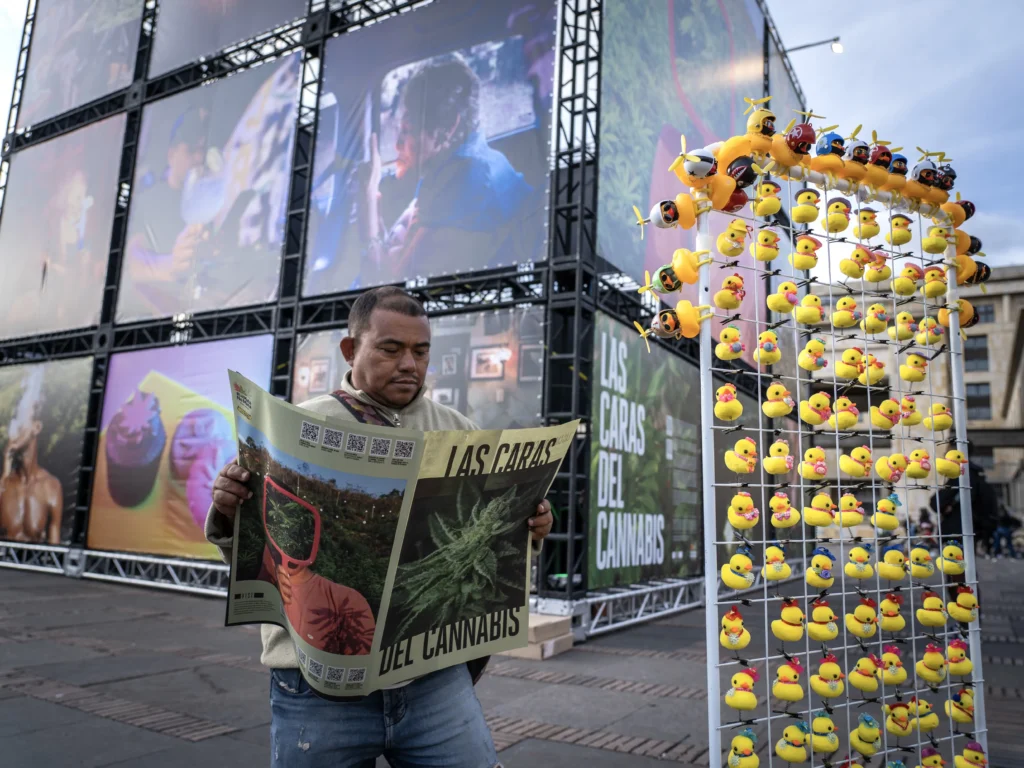
Exhibition – Las caras del cannabis

Las caras del cannabis is an exhibition project by LaMata_NoMata and the VIST Foundation, aimed at influencing debates on the destigmatization of cannabis consumers and cultivators in Cali. The project was displayed in a 10-meter-high cube at Plaza Bolívar in Bogotá in May 2024, and in Cali during COP16 in October.