The Afro-Colombian residents of Quinamayó have followed a unique tradition: celebrating Christmas 40 days after the traditional date, a custom begun under the subjugation of slavery.
2019 – on going
During the slave trade in Colombia (16th century-1851), the ancestors of Quinamayó were denied the chance to preserve the cultural expressions they brought from Africa. Catholic and Spanish campaigns forced them to abandon their beliefs, leading many to reframe Western traditions as a way of asserting their dignity.
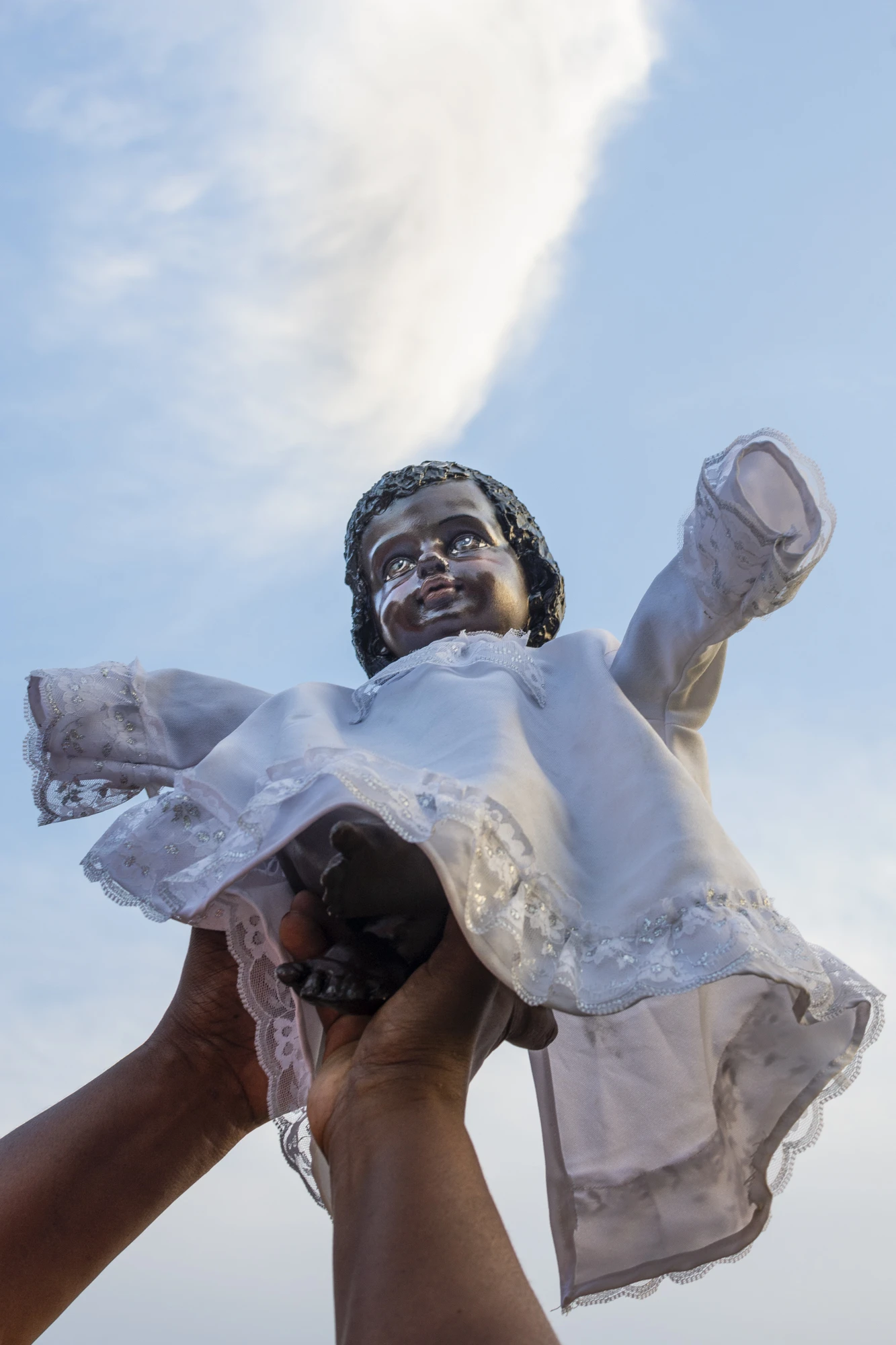
One such tradition was Christmas, centered around the figure of the Black Baby Jesus.
The celebration takes place 40 days after the traditional date of Jesus’ birth, symbolizing the time the Virgin Mary is said to have rested after childbirth. For Quinamayó, however, the true Christmas is celebrated in mid-February, a sacred event that has been preserved by this Afro-Colombian community, located in the southern Valle del Cauca region, for almost 200 years.
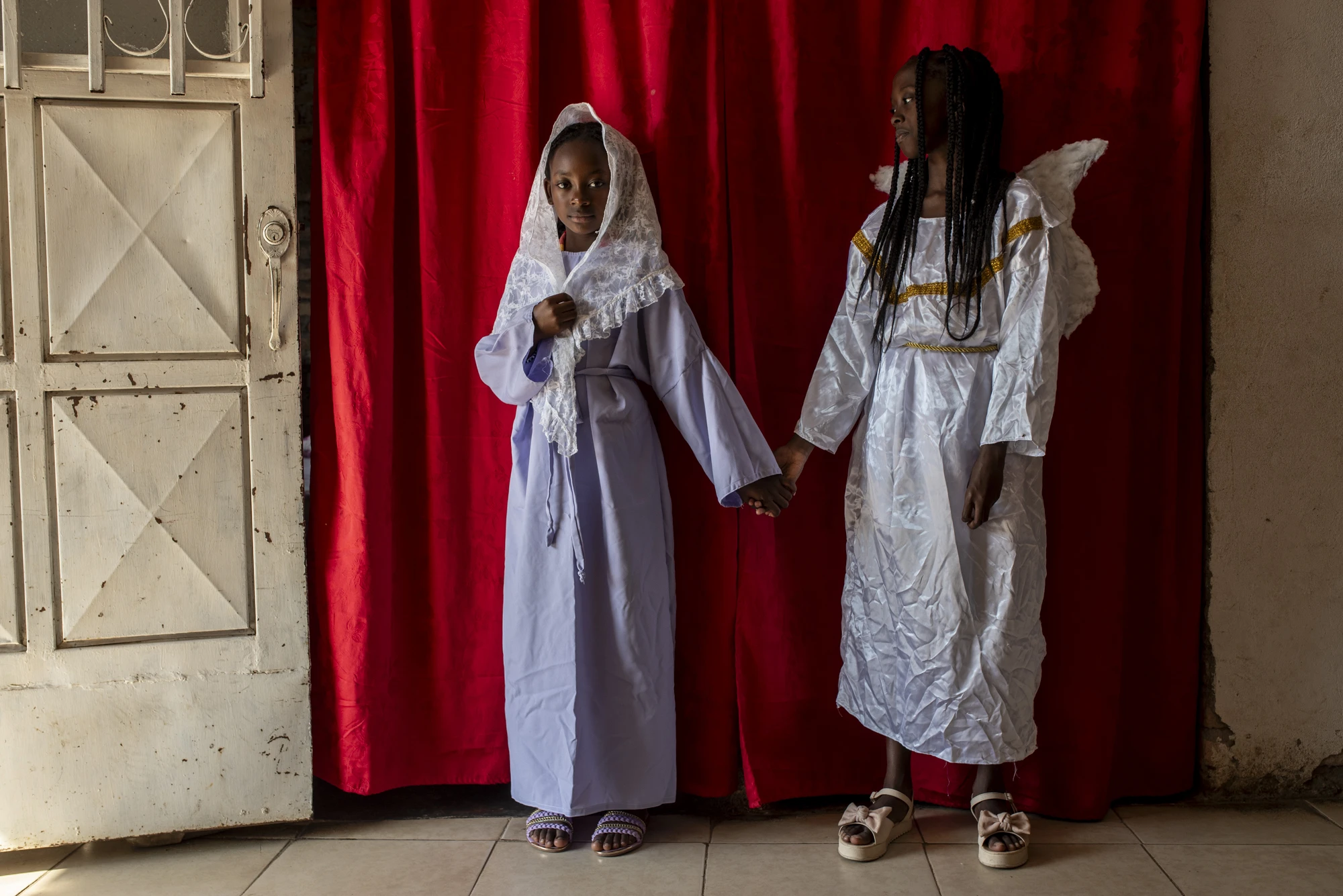
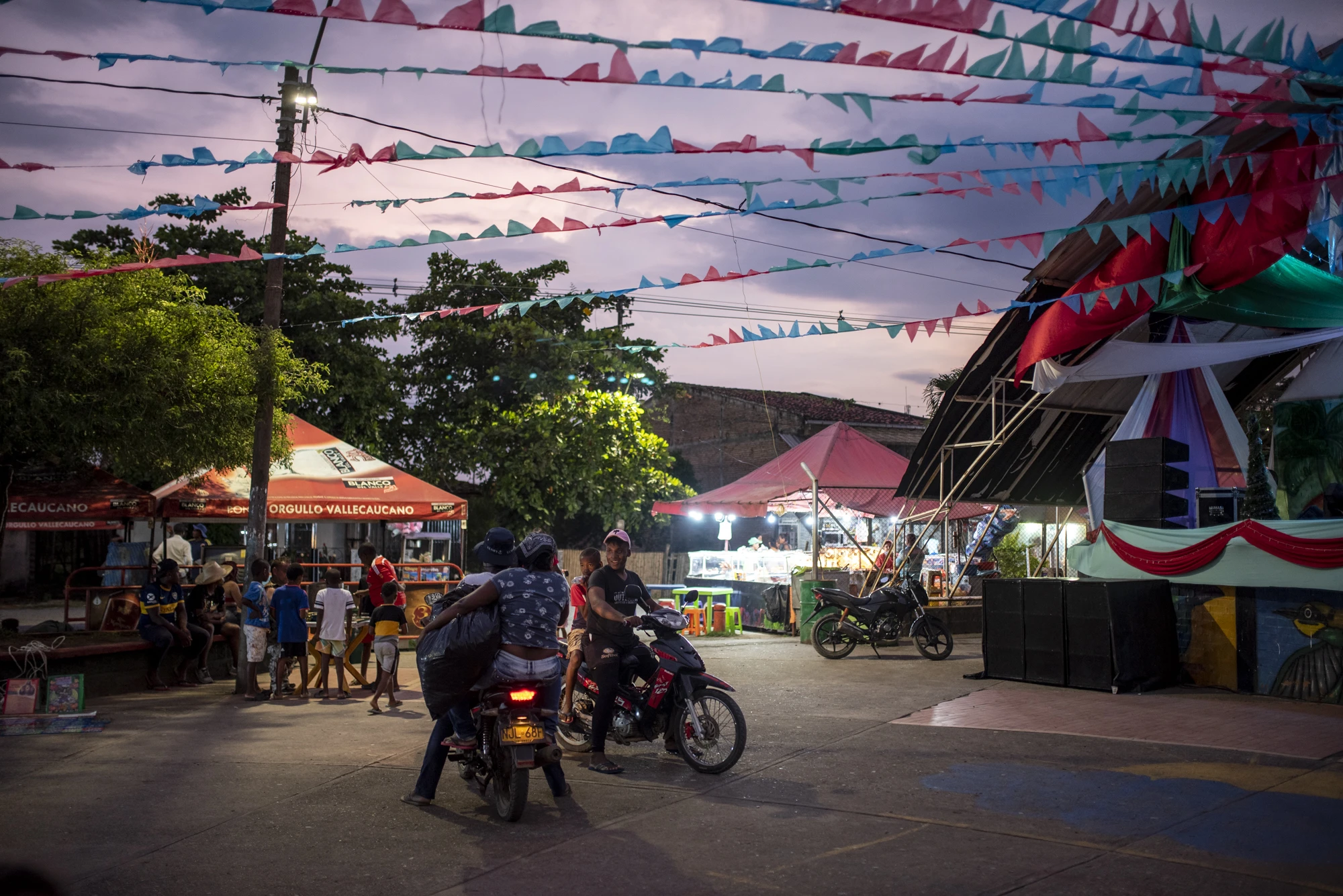
Christmas festivities span four days, each day with its own significance. The first day involves a cultural and musical gathering among Afro-Colombian communities from the Cauca and Valle del Cauca departments. The second day holds the greatest importance, with a procession in honor of the Black Baby Jesus, where children dress as biblical characters. The following afternoon, a pageant is held to choose the Afro Queen of Sympathy. On the fourth day, the community comes together to dance the ‘juga’ throughout the day.
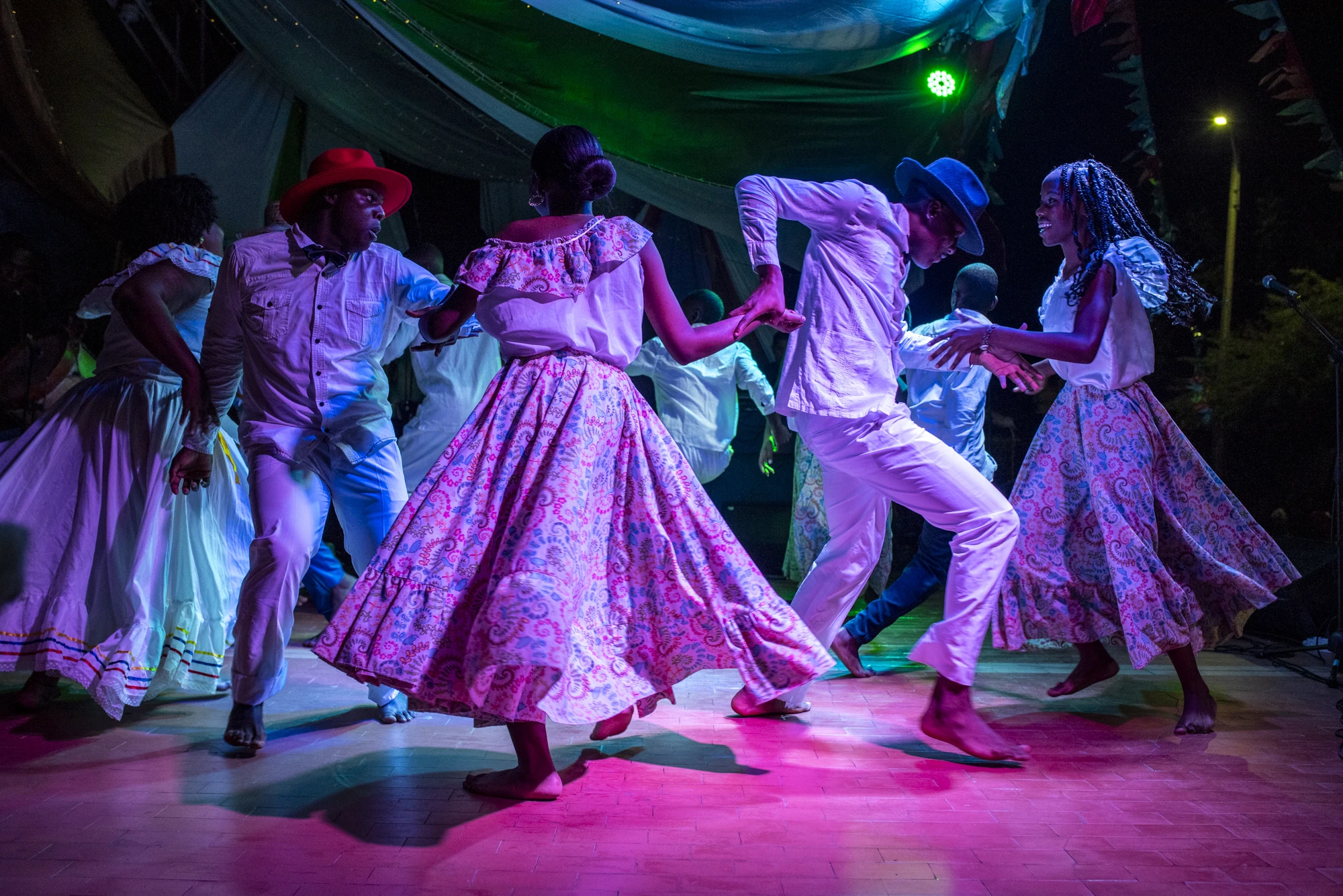
The ‘juga’ is an Afro-Colombian rhythm, where participants dance together, shuffling their feet in unison. This movement symbolizes how their ancestors walked shackled by chains, turning an image of oppression into one of freedom, joy, and collective unity.
These festivities represent a profound example of syncretism, where African traditions merge with Catholic symbolism, creating new cultural expressions that honor the community’s shared history. For Afro-Colombian communities like Quinamayó, this process has been a powerful way to preserve their identity and resist cultural erasure.
Having escaped the ‘hacienda’ where they were enslaved, Quinamayó’s ancestors found a sanctuary within their community—a place where they could fully express and nurture their cultural identity, passing down this tradition for generations.
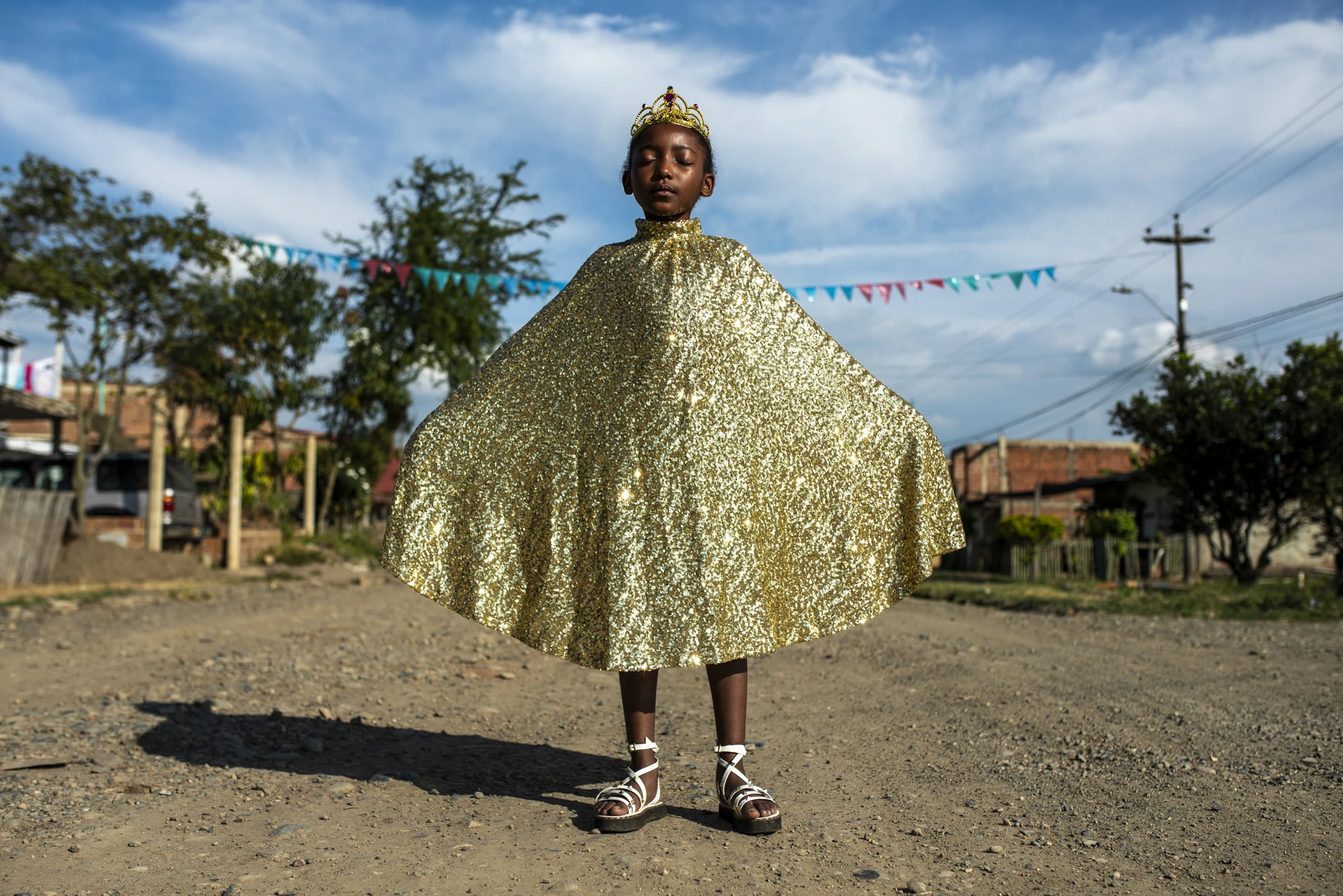
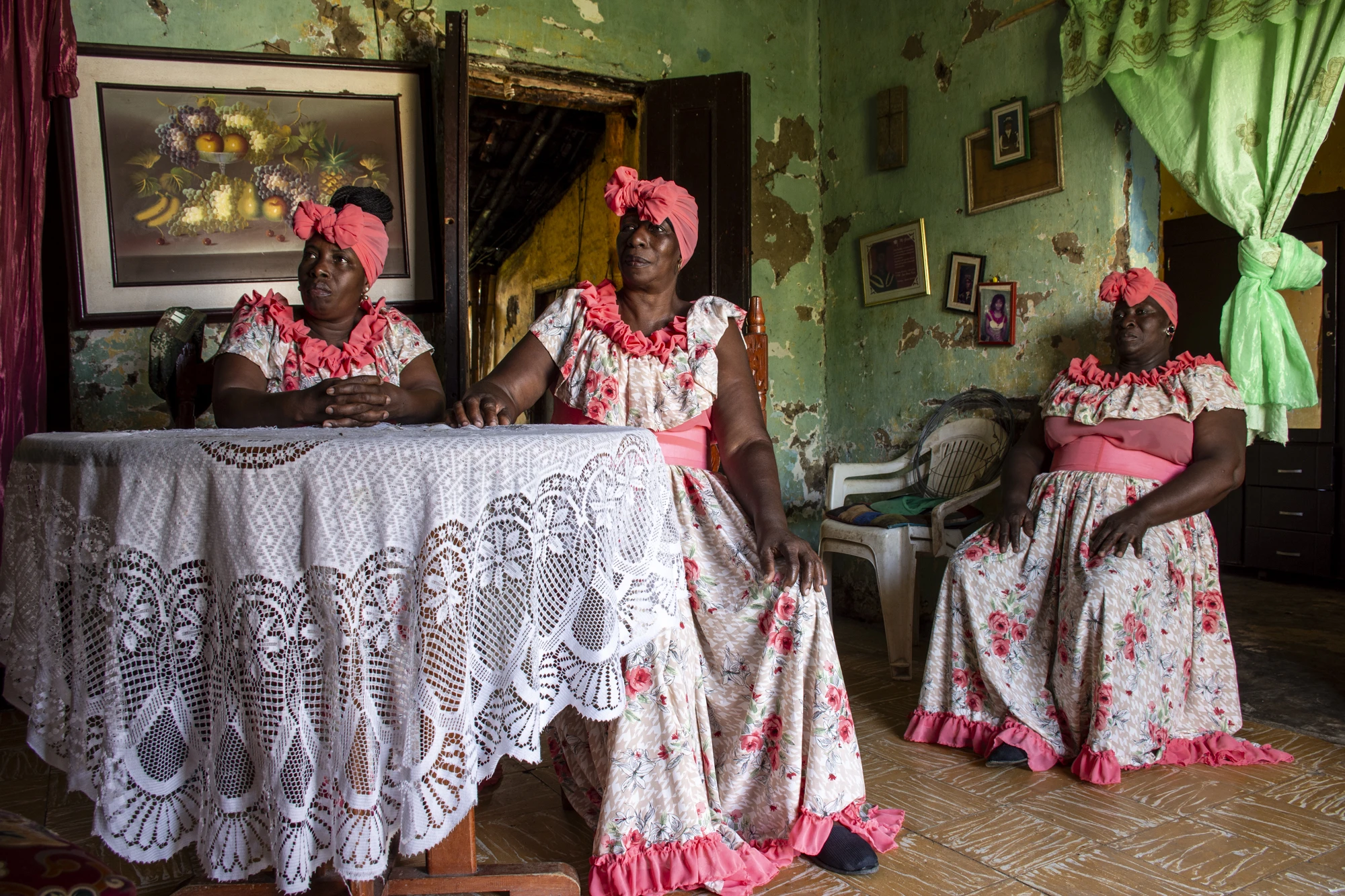
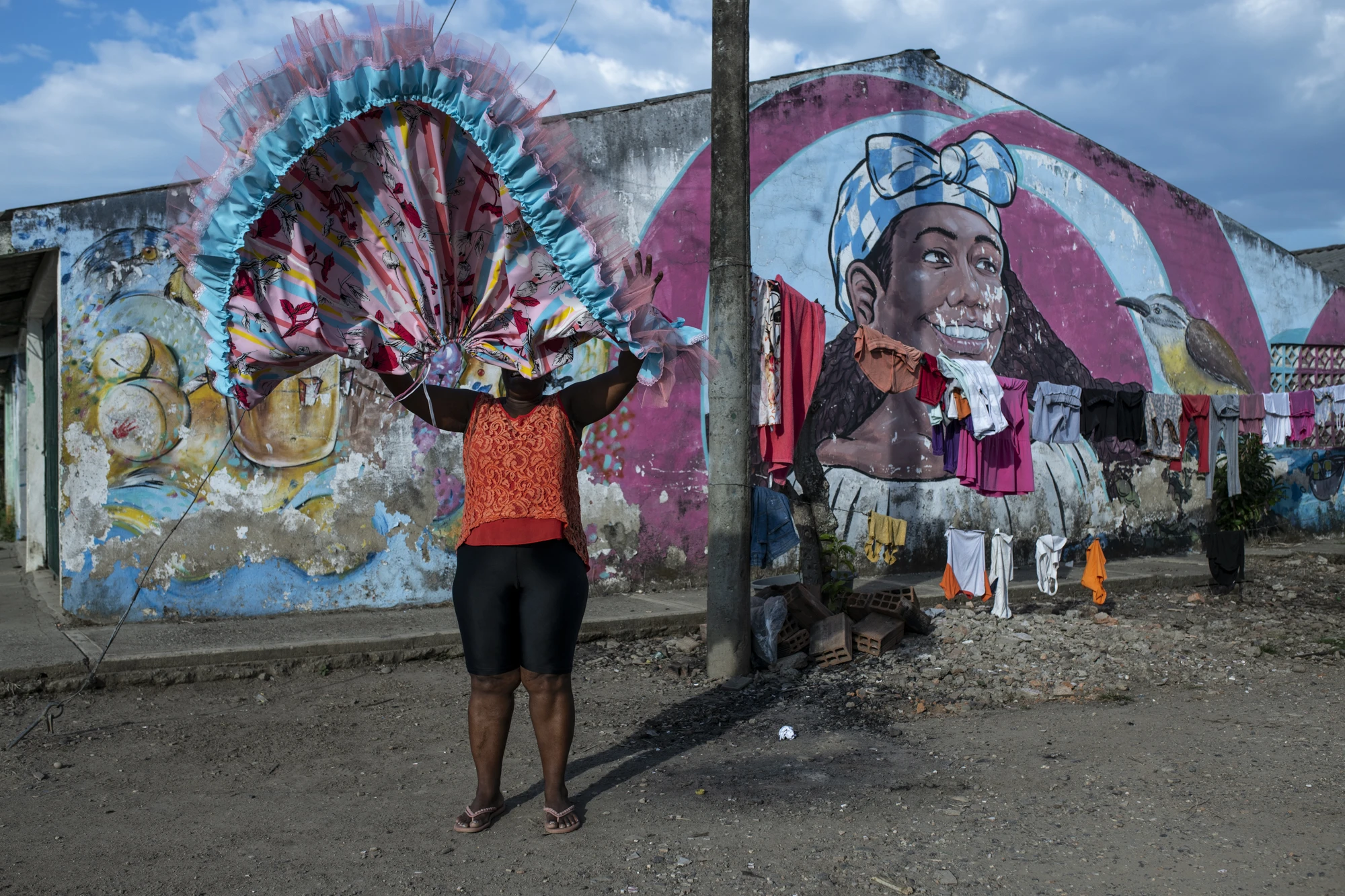
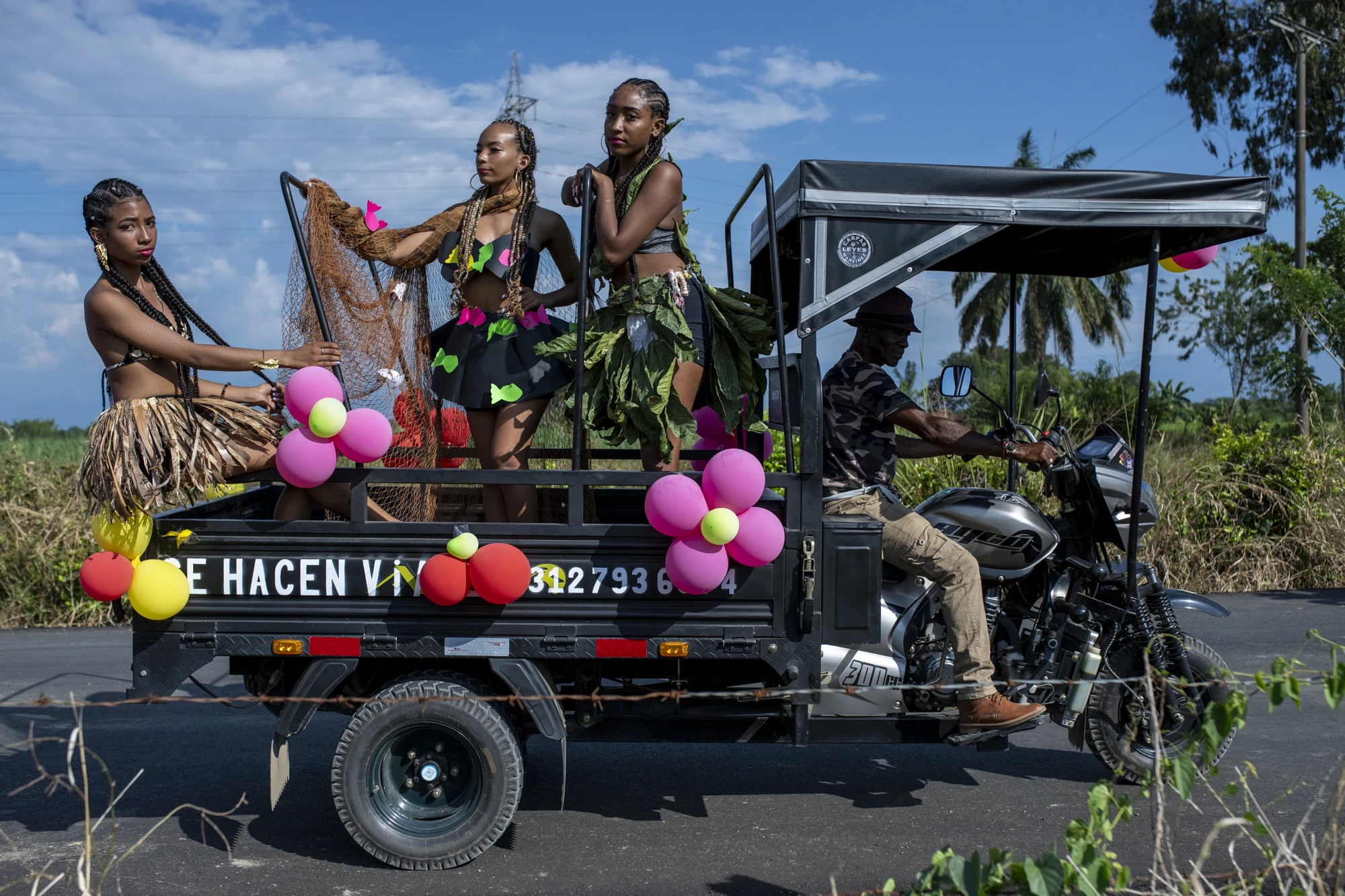
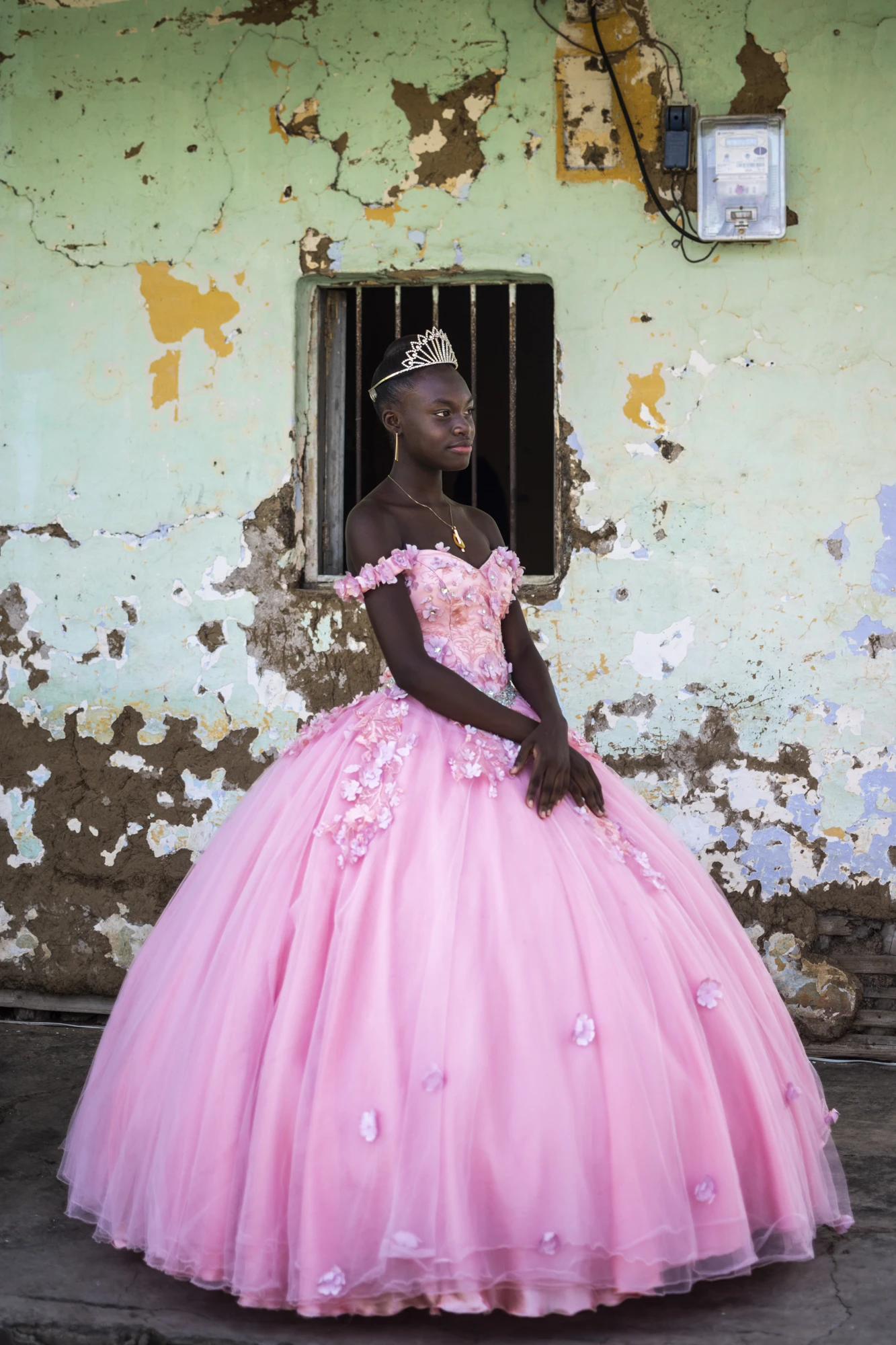
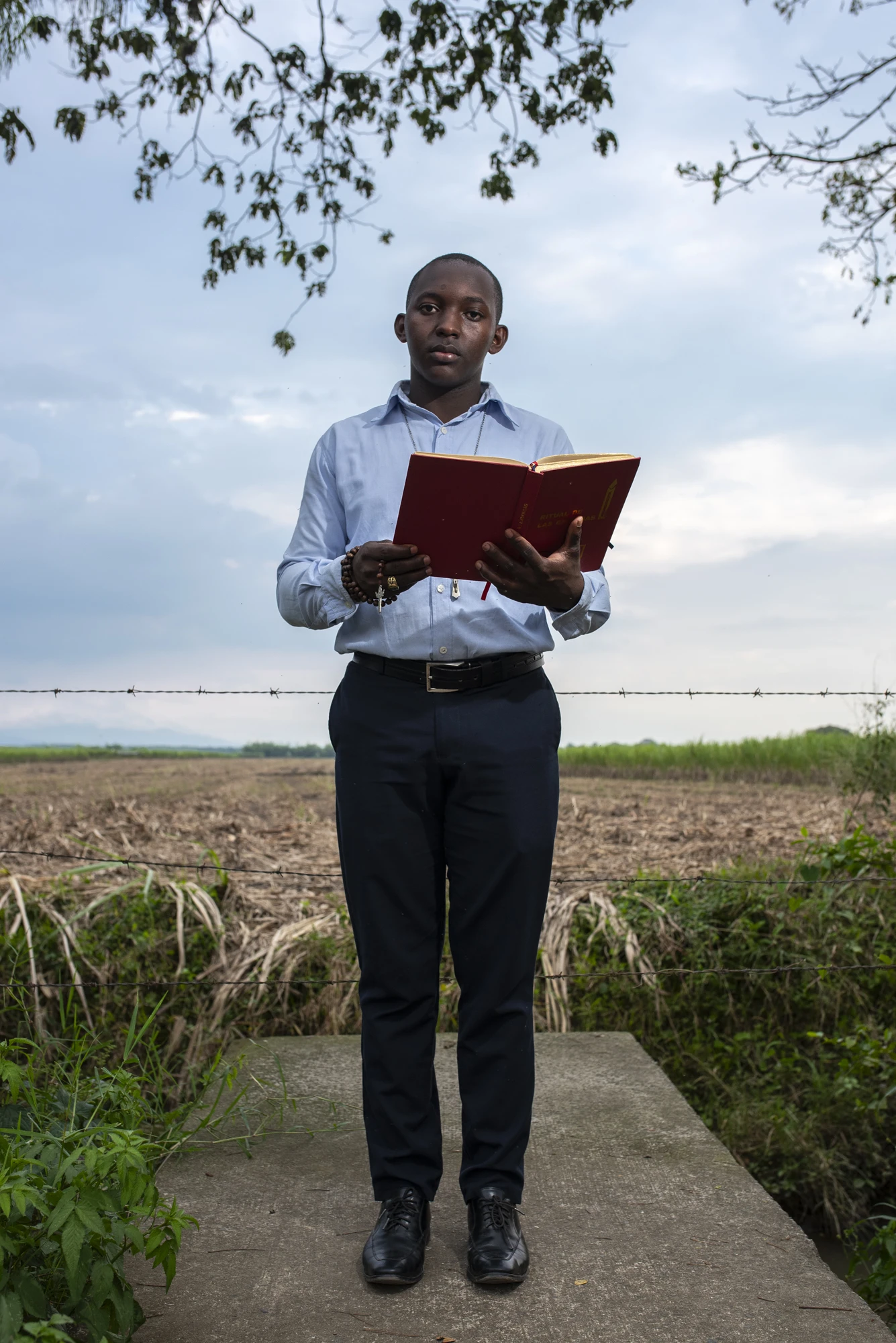
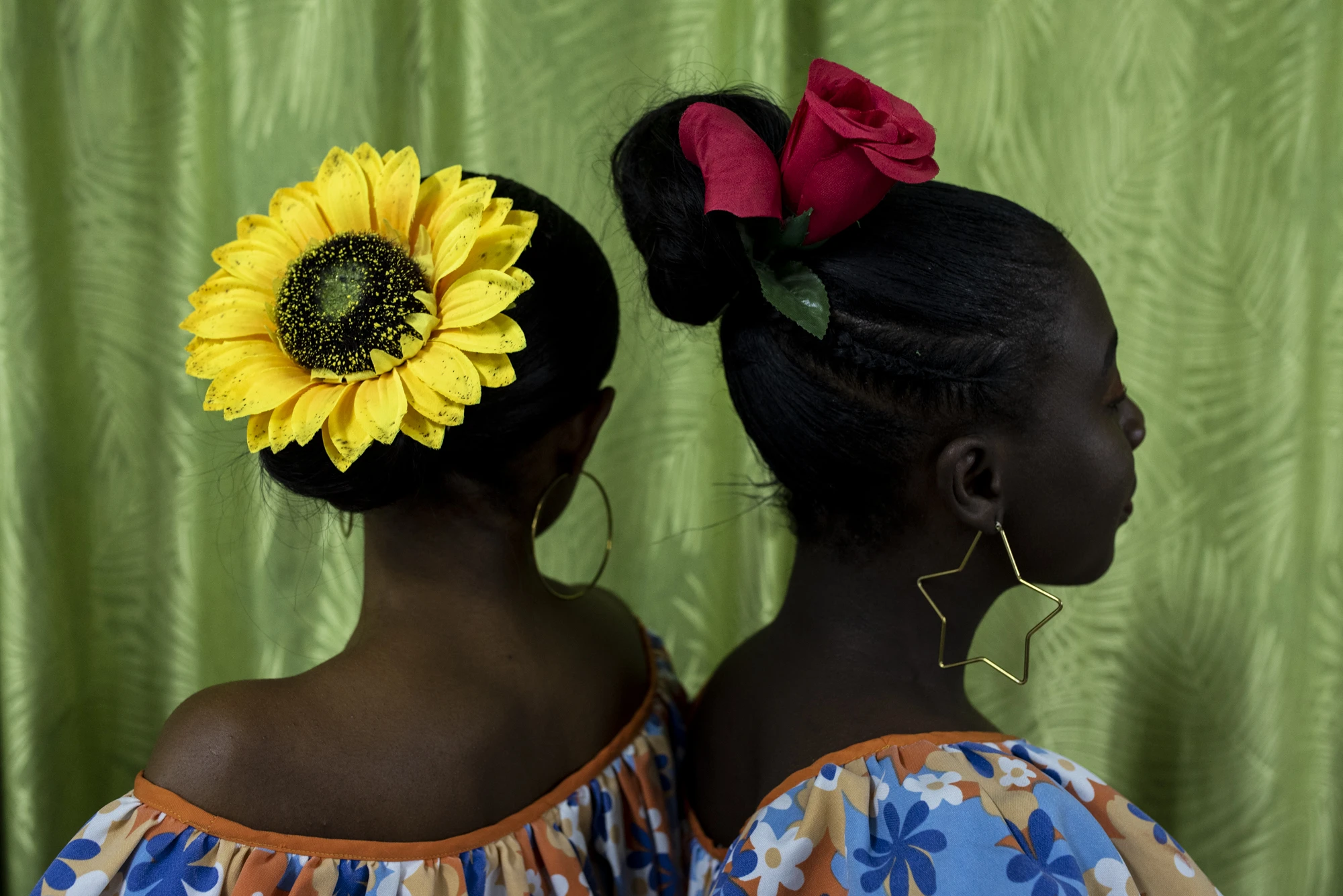
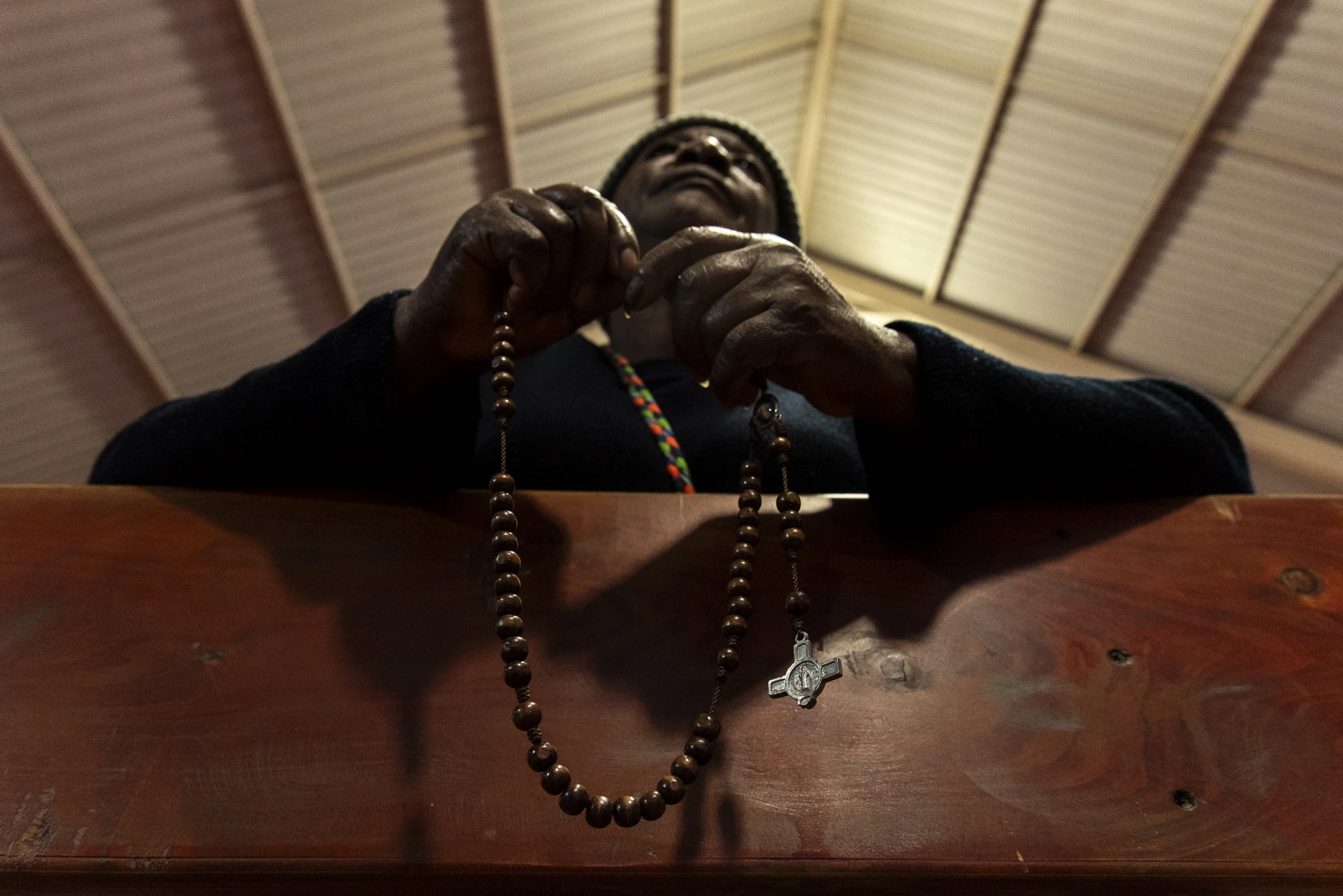
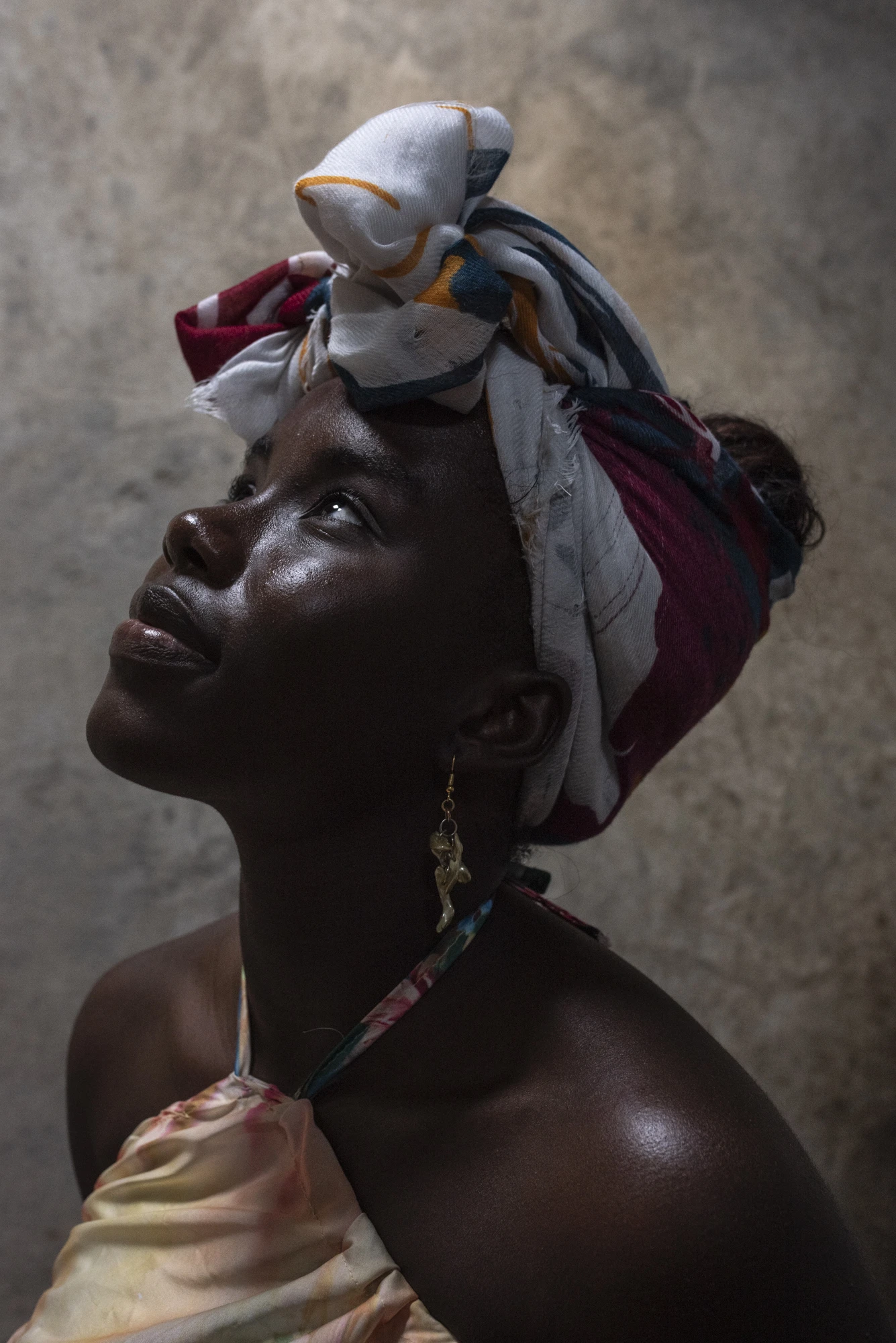
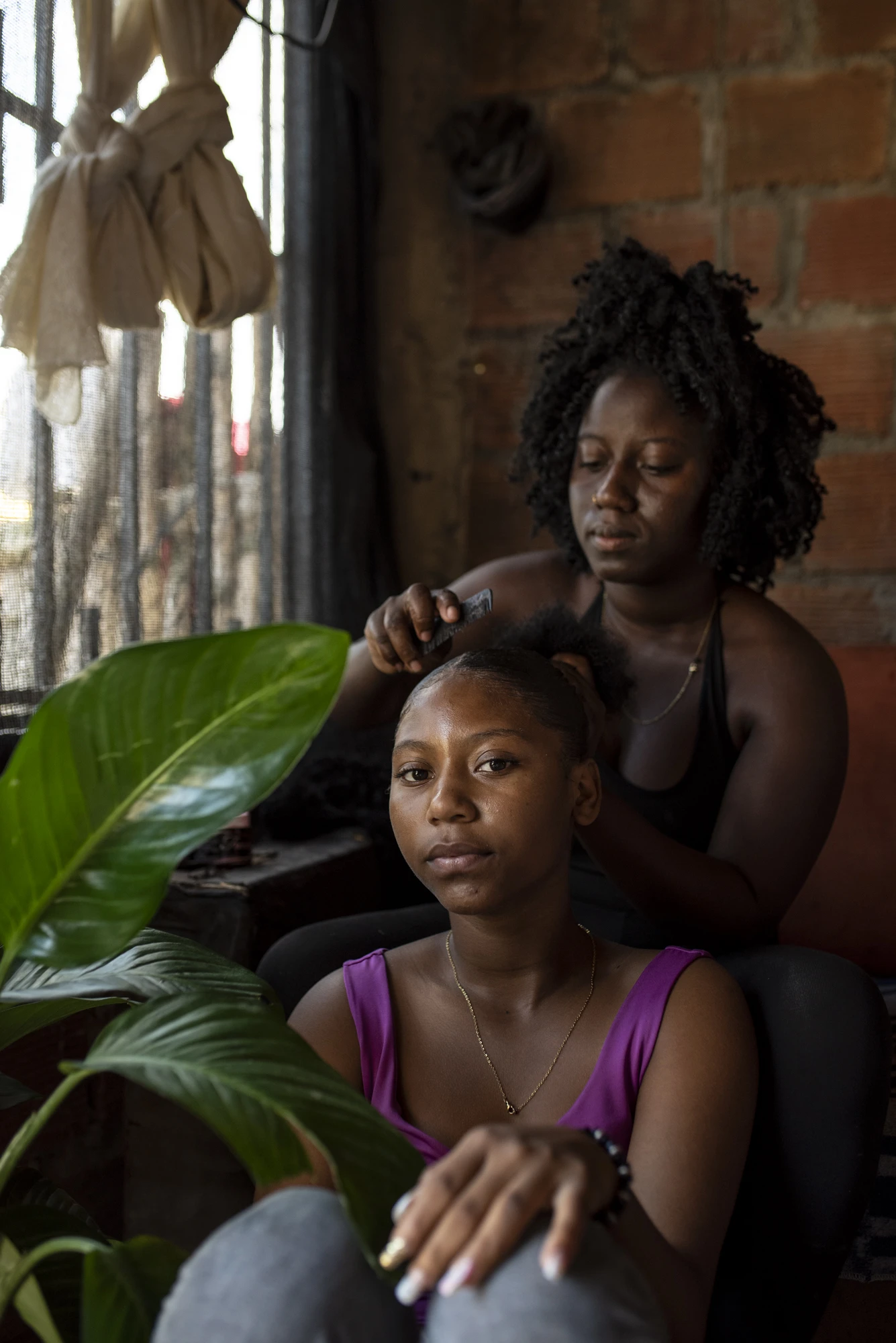
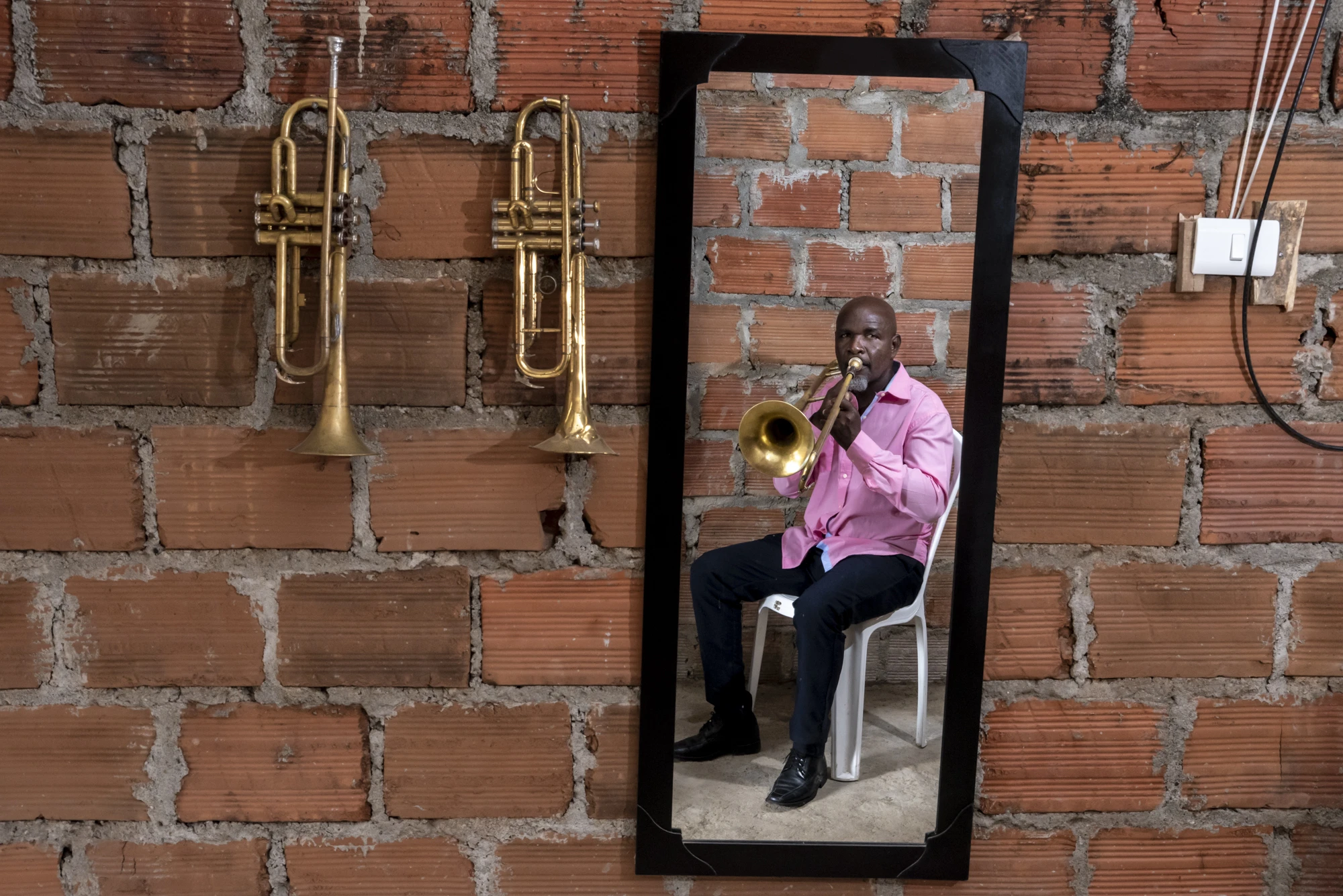
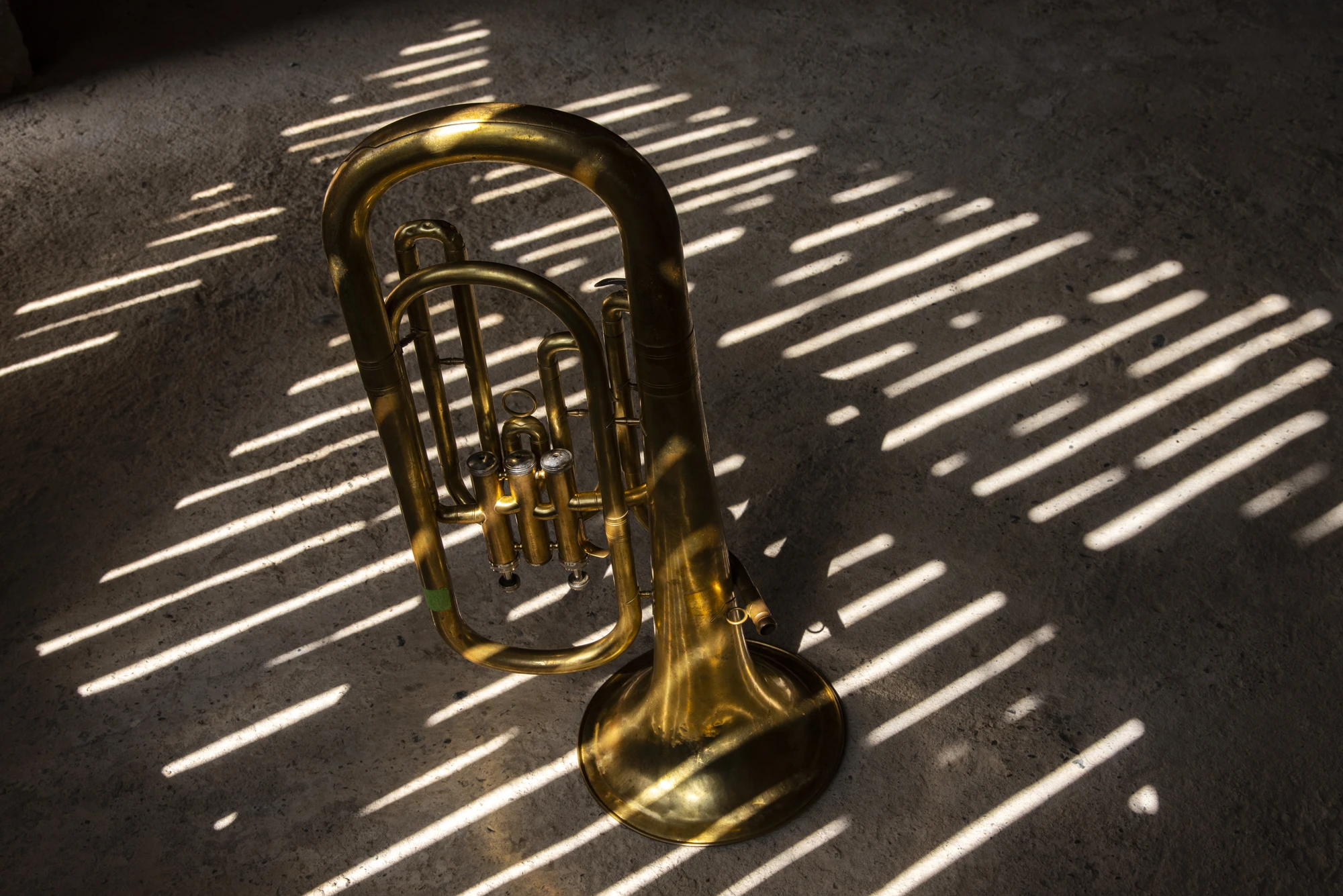
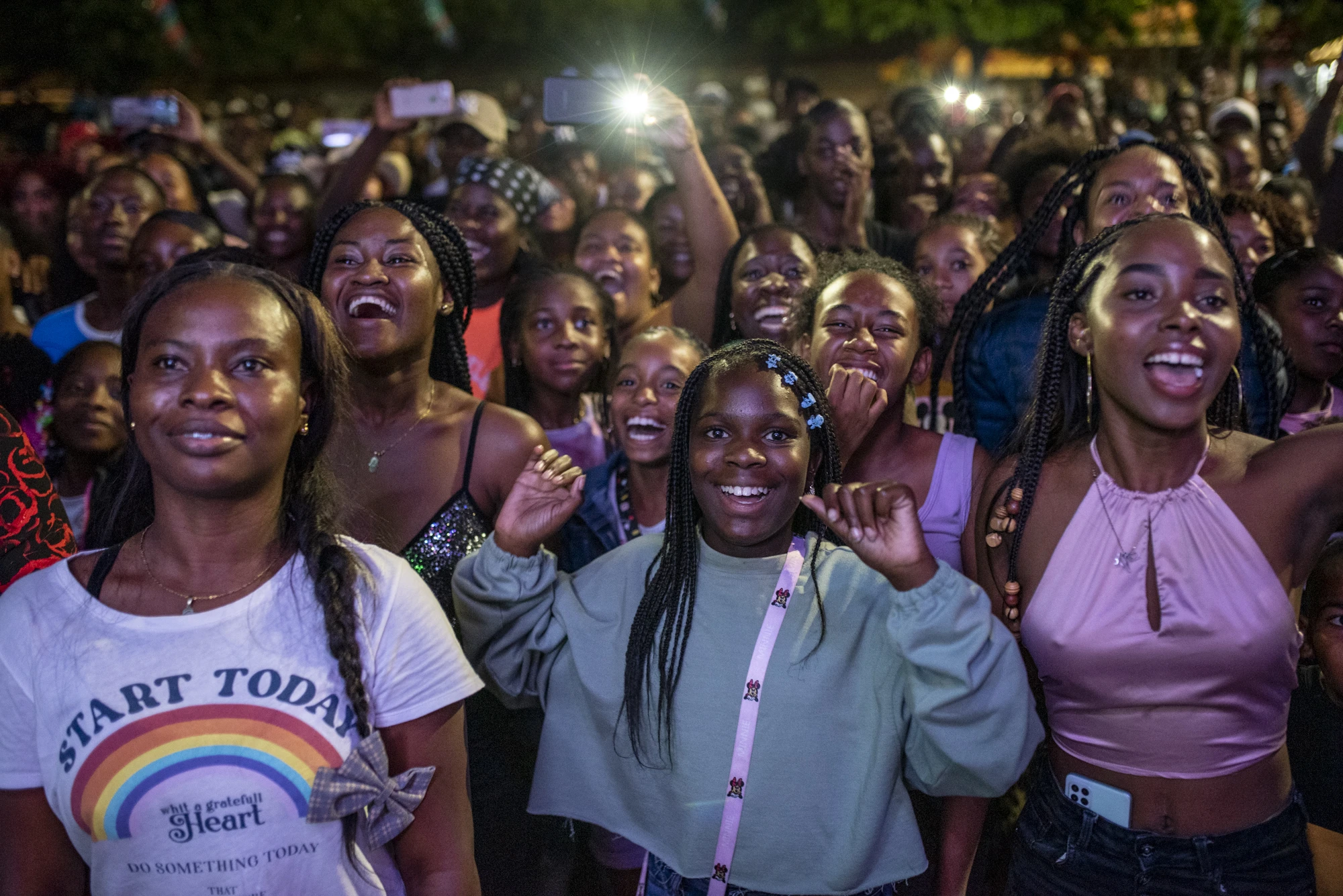
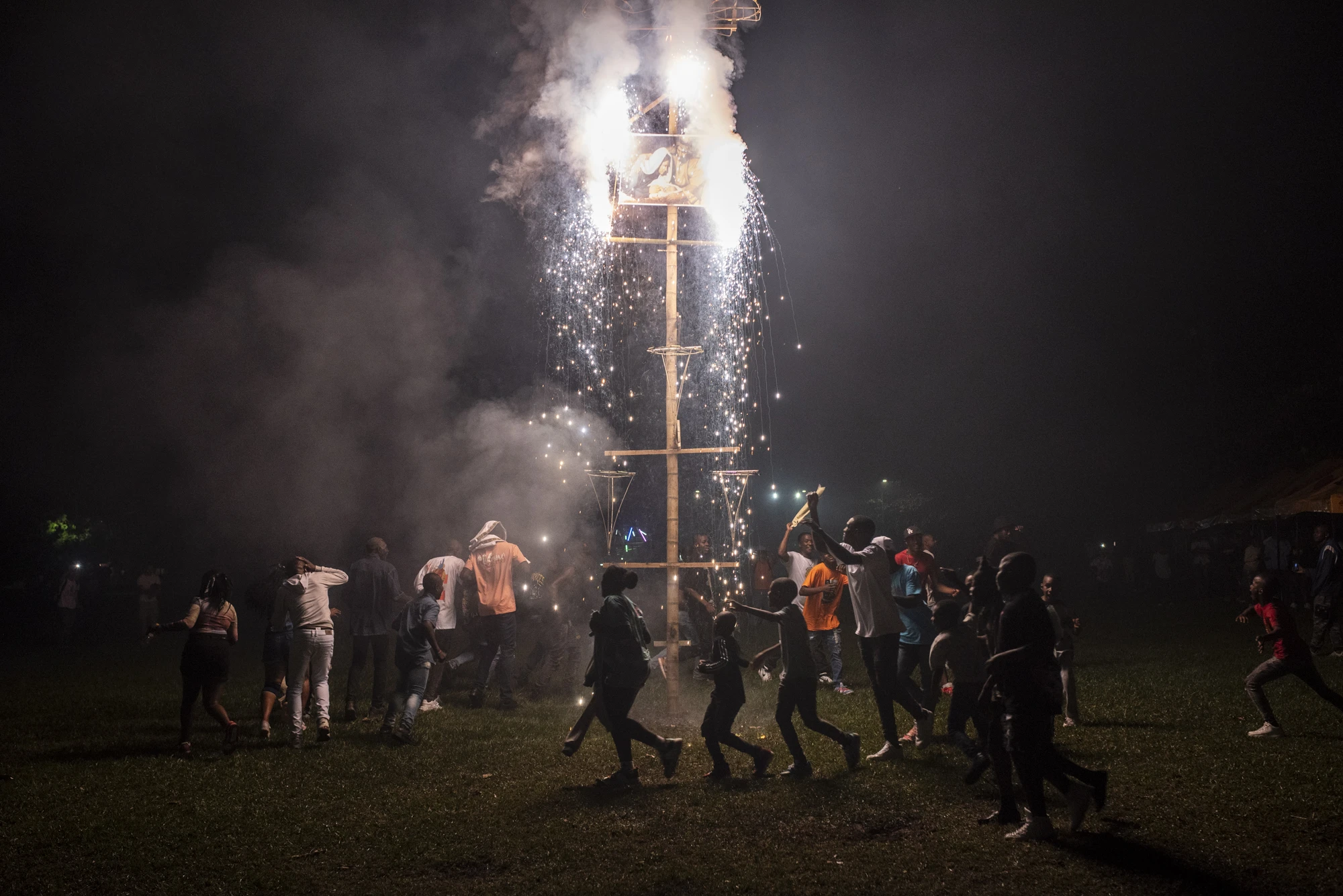
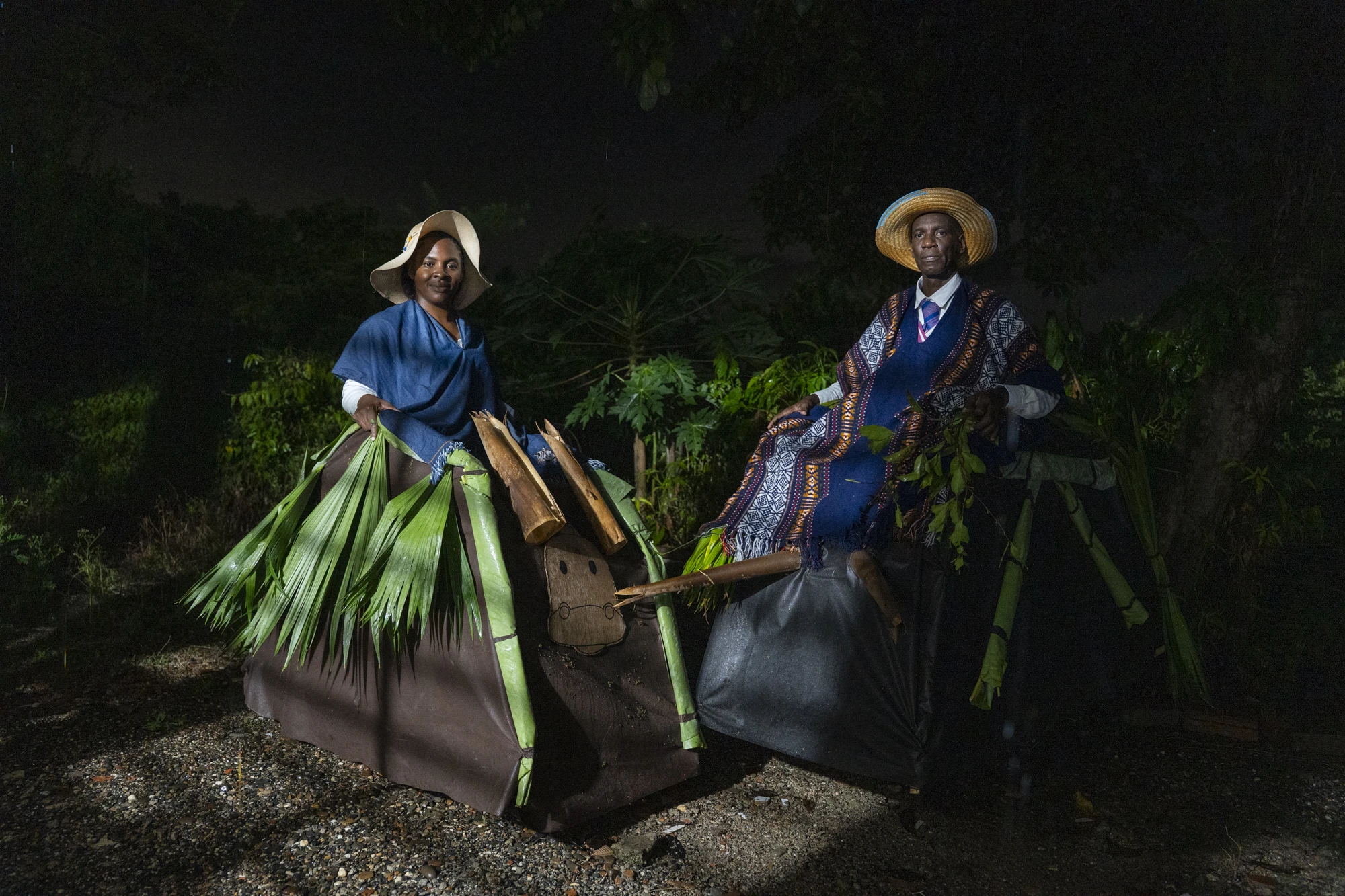
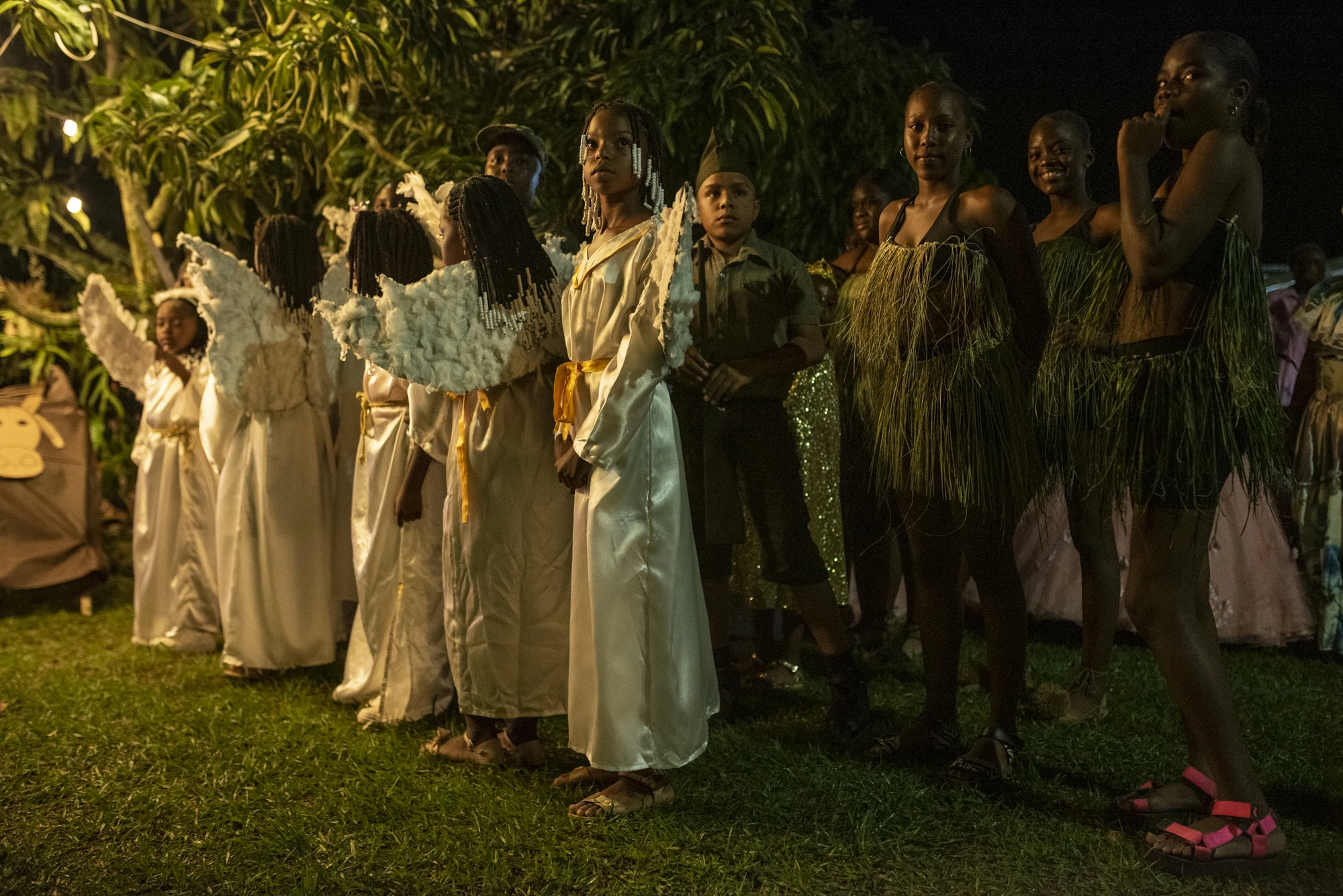
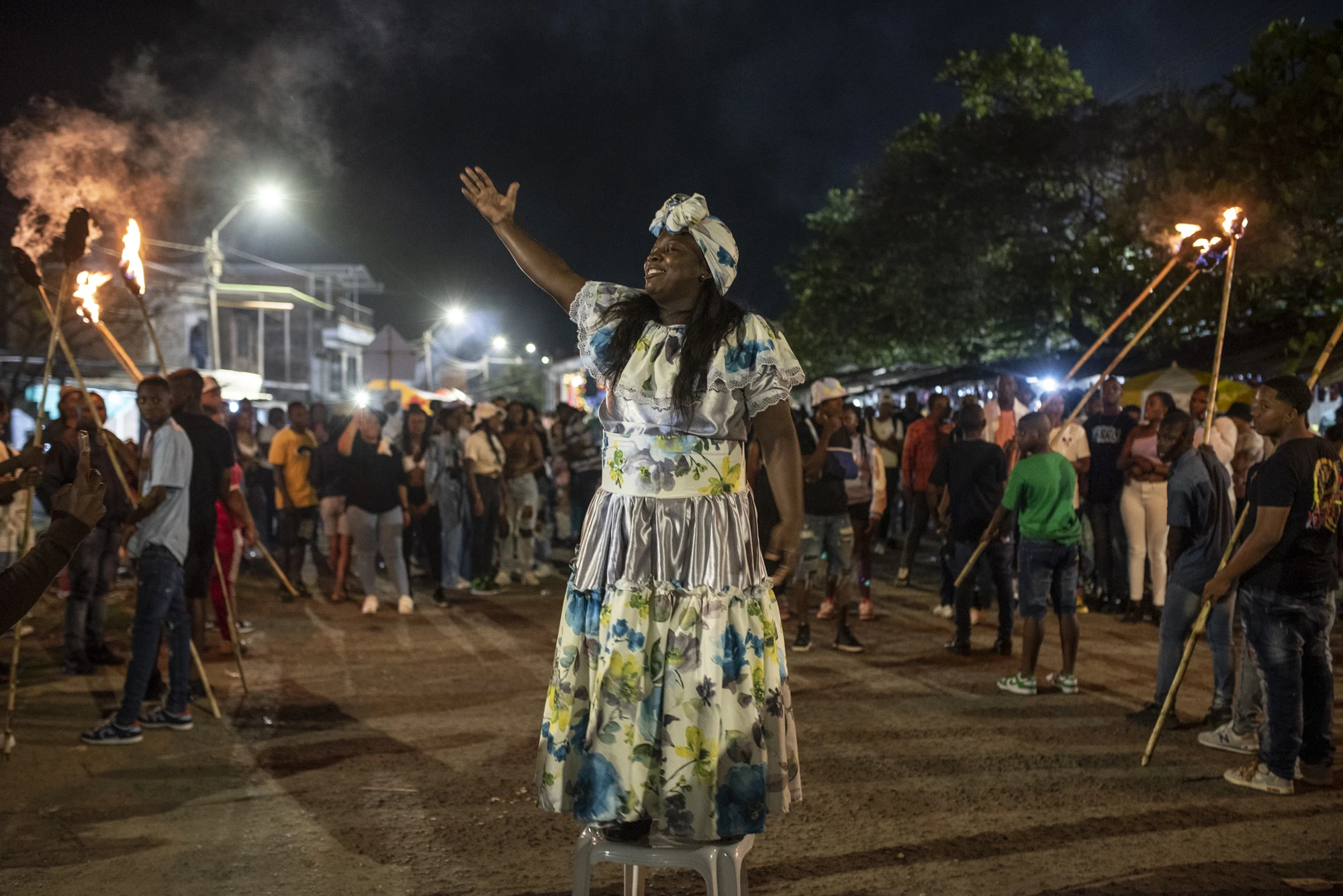
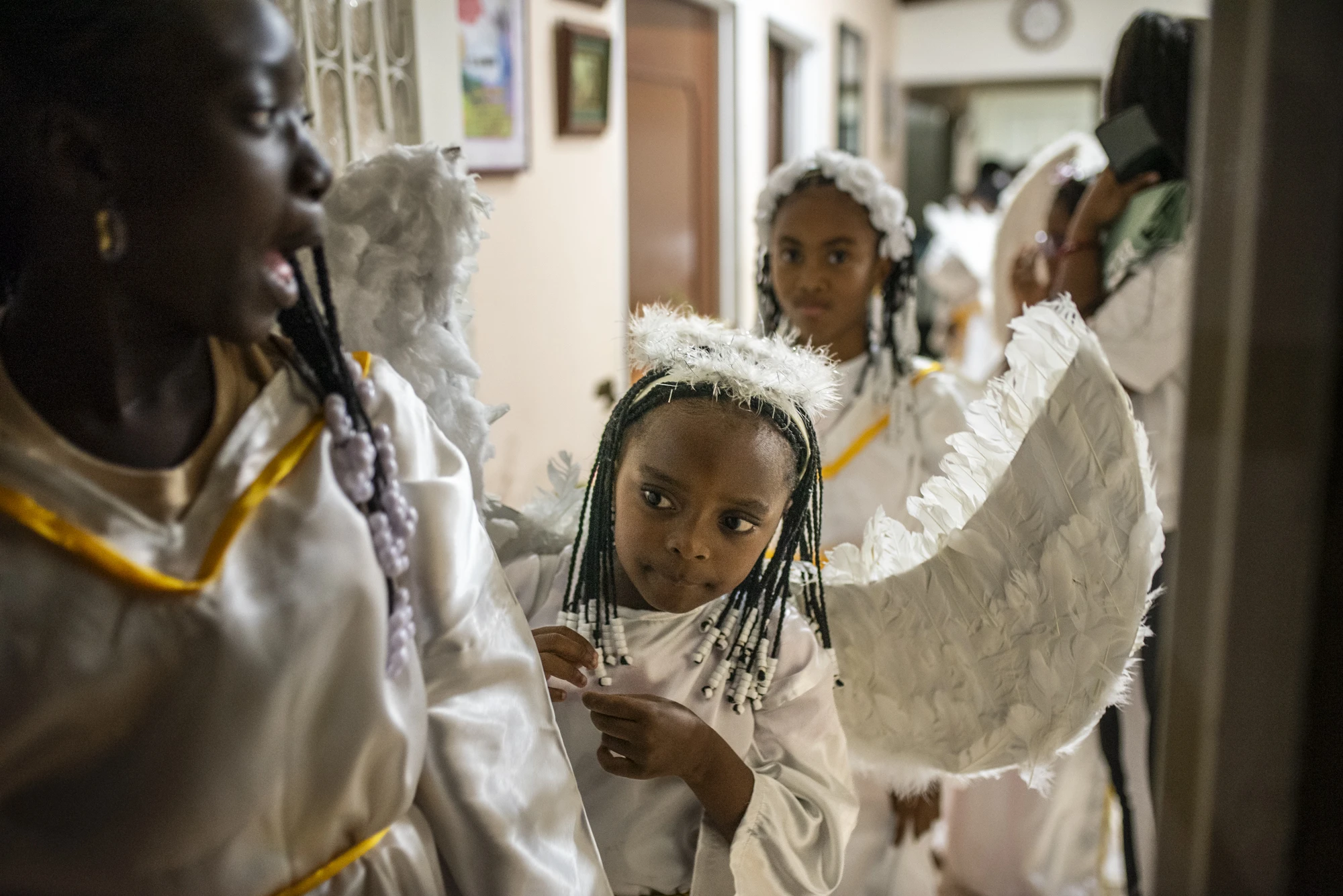
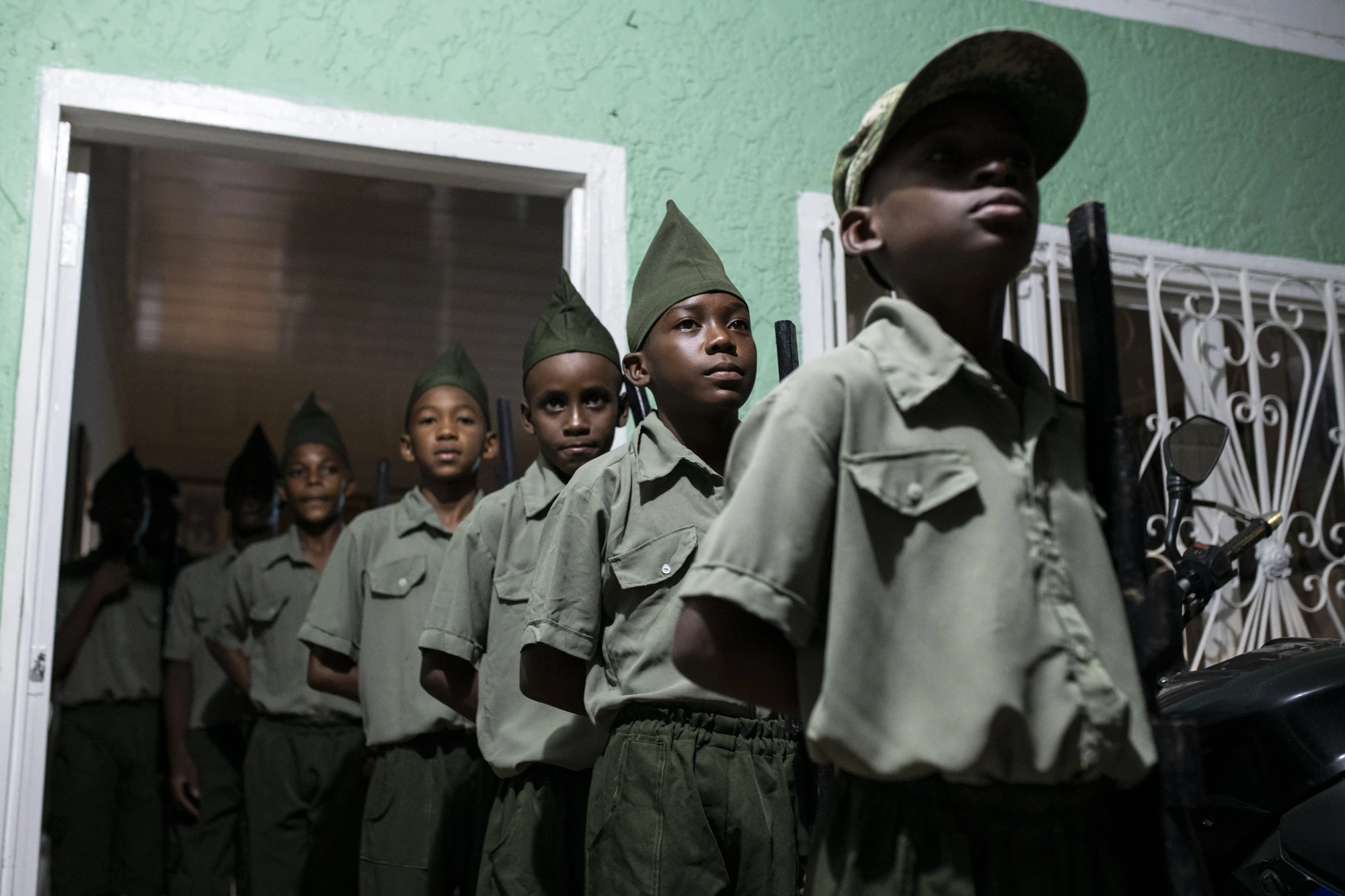
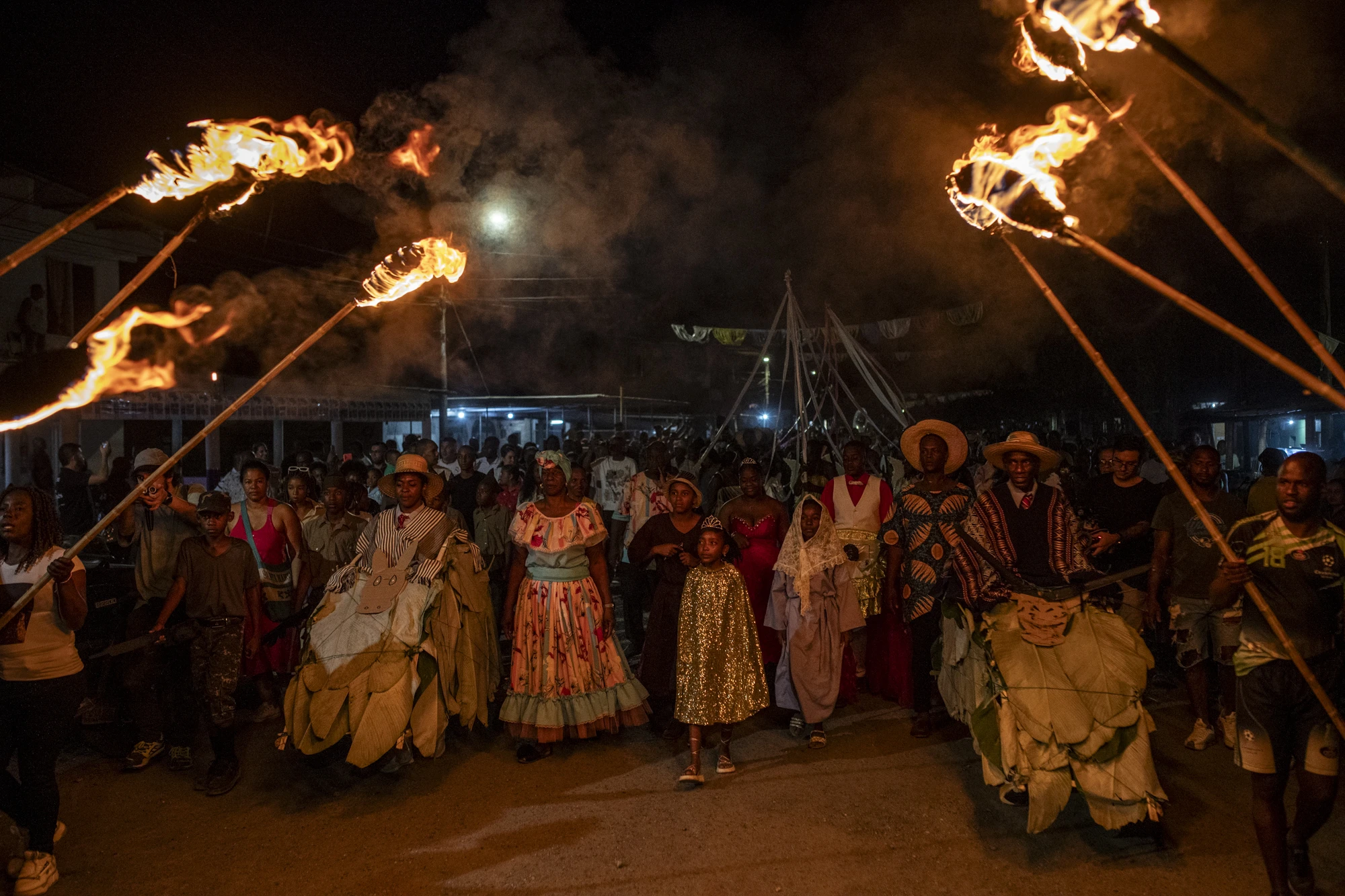
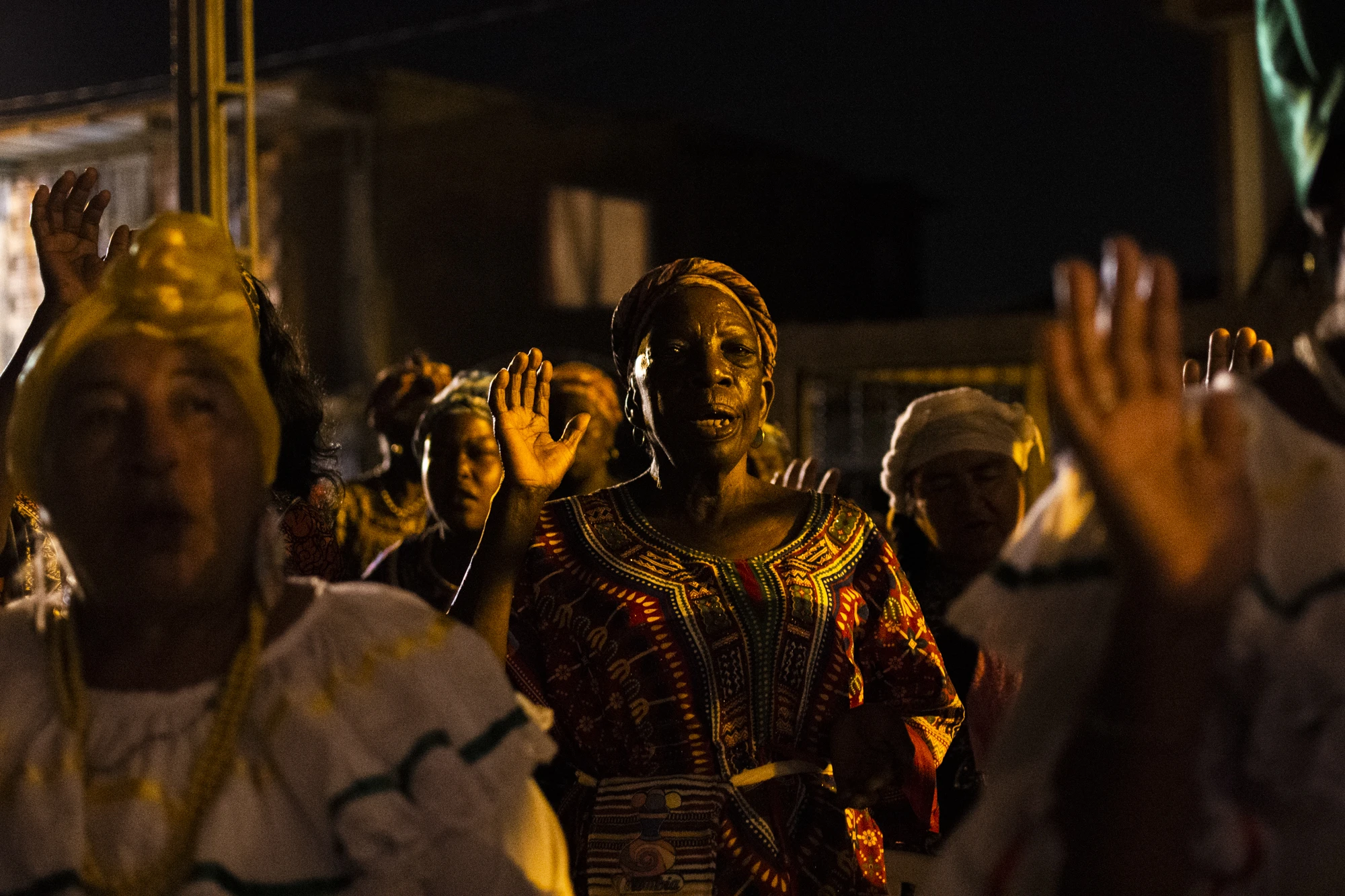
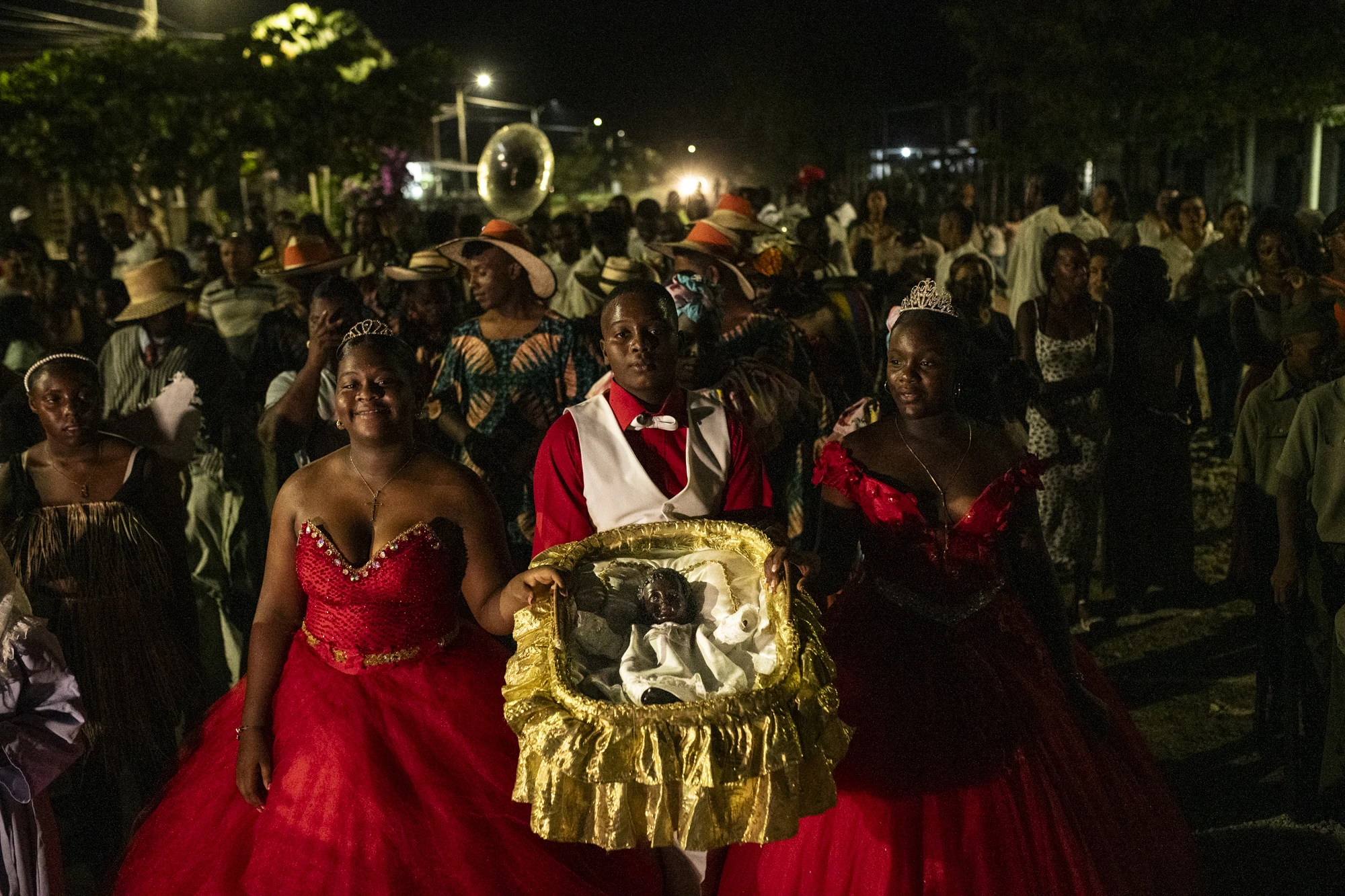
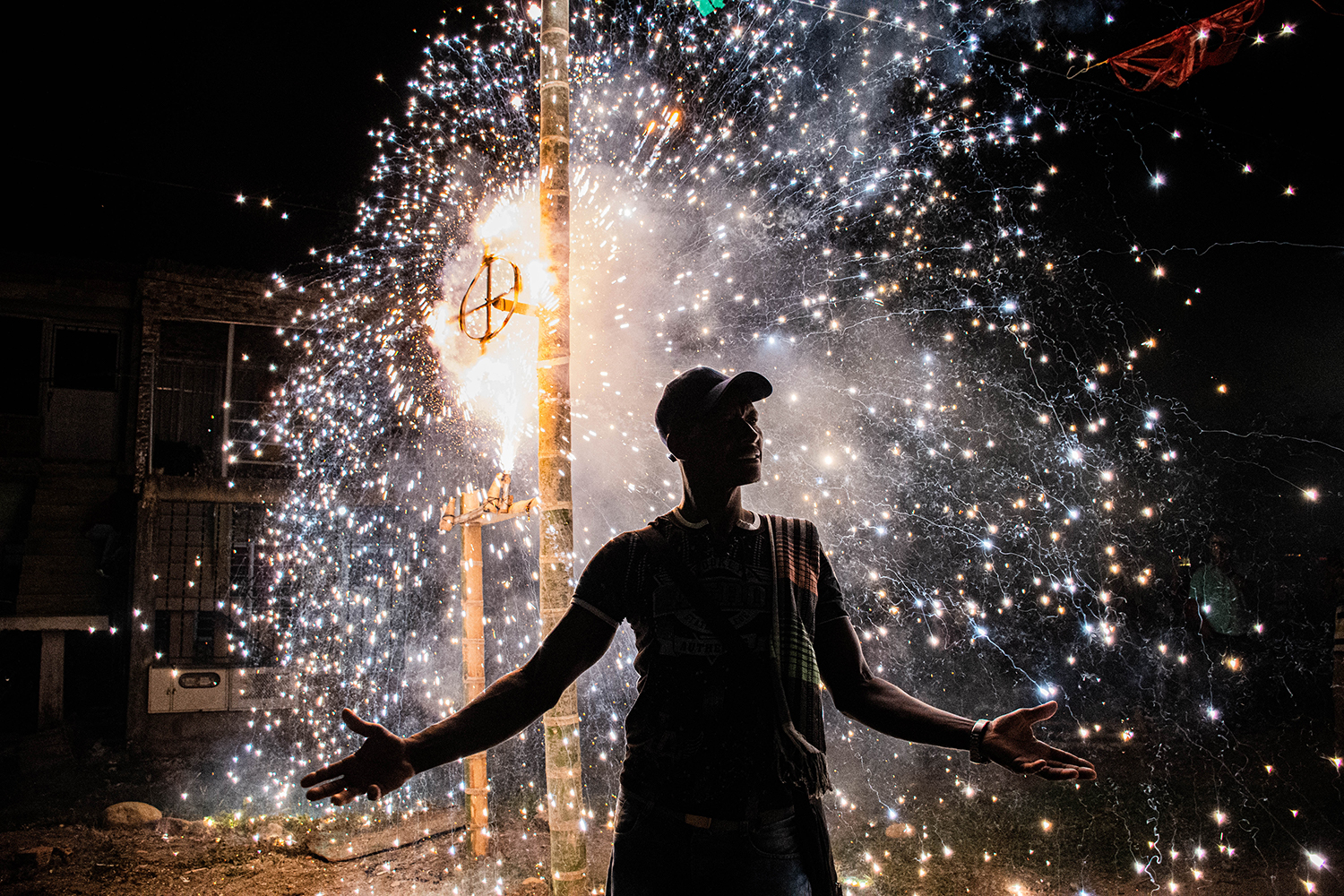
The “Star of Bethlehem,” Melany Márquez, 9, poses for a portrait on the main street of Quinamayó, on February 18, 2023. The “Star of Bethlehem” refers to the celestial guide that led the Magi to the birthplace of Jesus. Children like Melany dress as biblical characters to take part in a procession celebrating the arrival of the Messiah.A painting of the Holy Black Family hangs in front of one of the oldest houses in Quinamayó, made of wattle and daub, on March 14, 2021. This was the main setting for a Christmas television program, when COVID-19 pandemic restrictions were still in place and large crowds were not allowed.(From left to right) Luz Nelly Balanta, 58, Mirna Rodríguez, 58, and Luciala Balanta Peña, 57, are some of women who lead the realization of Christmas in Quinamayó. In the photo, they wait their turn to participate in a television recording of the celebration. Luz Nelly Balanta, a 61-year-old weaver, shakes one of the dresses that the “cantaoras” (famale singers) will wear during the Christmas processions in Quinamayó, on February 16, 2024. “I always choose colorful, eye-catching fabric to stand out from the crowd, just like the wives of enslaved men did,” explains Balanta.Ximena Casarán Reyes, Nicol Dayana Salazar Borrero, and Zcharick Nicoll Gutiérrez, contestants in the Afro Queen of Sympathy pageant, pose for a portrait at the track used to showcase Quinamayó’s celebration to neighboring communities in the south of Valle del Cauca department, on February 18, 2024.Sarahy Andrea Peña, 17, is one of the three godparents of the Black Baby Jesus, a role designated to hold the figure of the Messiah during the Christmas processions. Peña poses for a portrait in front of one of the oldest houses in Quinamayó, on March 14, 2021. Her dress references the ‘Quinceañera’ celebration, a tradition in Latin American countries such as Cuba, Colombia, and Mexico, marking a woman’s transition into adulthood at the age of 15.José Eider Mancilla, sacristan at St. Martha of Bethany Parish, poses for a portrait while holding a manual for the Catholic funeral ritual on the outskirts of Quinamayó, on July 16, 2022. “The celebration of the worship of the Black Baby Jesus is a fundamental part of our community and lives within each of us. That’s why we have the mission of preserving this tradition for future generations,” says Mancilla.Two members of the ‘Ecos del Tambor’ dance group pose for a portrait at the main school in Quinamayó during a cultural gathering of Afro communities from the Cauca and Valle departments, on July 16, 2022.Midwife María Dey Bejarano performs a series of massages on Leidy Catalina Camacho, 23, while her granddaughter (on the far left of the photo) Briana Sofía and Simón, Leidy’s first-born, observe the procedure. María Dey, who has attended more than 120 births in Quinamayó, is the last traditional midwife in the town. A woman raises the figure of the Black Baby Jesus in Quinamayó, on March 14, 2021. Some of the Catholic symbols in the town feature Afro-descendant traits to help the community feel a deeper connection to them.Brayan Alexander Carabalí plays an alto trombone during the Yellow Beach Festival, a village celebration on the banks of the Cauca River in Quinamayó, of August 7, 2024, a holiday dedicated to family in the town. The Cauca River was used by their ancestors to establish their community after fleeing from slavery. The music played by Carabalí is the Juga or Fuga (“escape”), a traditional Afro-Colombian rhythm that celebrates their people’s freedom.A woman prays the rosary during Mass at St. Martha of Bethany Parish in Quinamayó, on March 2, 2023. Although Evangelical beliefs have gained strength in the town, the majority of the 6,000 inhabitants are Catholic.Melissa Mosquera, representative of Sixto María Rojas School, poses for a portrait inside a friend’s house in Quinamayó, on June 1, 2022. “I want to fight for my community, to preserve our racial and cultural identity, just as my grandmother and her ancestors did—not for people to remember me, but for all of us,” Mosquera says.Jadyra Carabalí, 21, braids the hair of María del Mar Carabalí, 14, for her presentation during the Afro Sympathy Pageant in Quinamayó on February 19, 2023. Hair holds significant cultural value in Afro-Colombian communities as it represents a connection to African ancestry and embodies resistance to colonial beauty standards.Arvey Mina Carabalí, a 56-year-old Juga musician, poses for a portrait inside her house in Quinamayó, on March 4, 2022. Carabalí teaches traditional Afro music in Quinamayó and neighboring communities in the southern Valle and northern Cauca departments.An euphonium rests on the floor of the house of Arvey Mina, one of the most important precursors of the juga in Quinamayó, on March 4, 2022.The “Virgin Mary” Jeinny Lucumí, 9, and the “Angel” Sofía Peña, 9, pose for a portrait inside a house in Quinamayó, on February 18, 2023. The Annunciation is one of the key moments in the New Testament, as it marks the moment when the angel Gabriel announces to the Virgin Mary that she will conceive the Son of God.The “Virgin Mary” Jeinny Lucumí, 9, and the “Angel” Sofía Peña, 9, pose for a portrait inside a house in Quinamayó, on February 18, 2023. The Annunciation is one of the key moments in the New Testament, as it marks the moment when the angel Gabriel announces to the Virgin Mary that she will conceive the Son of God.Girls react to a Hip Hop dance performance during the Cultural Friday of Quinamayó’s Christmas celebration, on February 18, 2023. Modern music genres have also started to attract the younger generations of the town, blending traditional celebrations with new cultural expressions.The folkloric dance group performs a piece of the “pasillo negro” (a traditional Afro-Colombian music and dance genre) during the Cultural Friday of Quinamayó’s Christmas celebrations, on February 18, 2023.People dance the Juga around the fireworks in Quinamayó, Colombia, on February 19, 2023. The structure features an image of the Holy Family on top, symbolizing the fusion of Afro-Colombian traditions and Catholic faith during the celebration.Mariana Aponzá, who plays the role of the mule, and Jener Augusto Zapato, who plays the ox, pose for a portrait in Quinamayó (VALLE) on February 15, 2025.Girls performing the “Angels” and “Las Indias” (indigenous women) participate in the Christmas procession in Quinamayó on February 18, 2023. In Catholic belief, angels are considered messengers of God. For the people of Quinamayó, “Las Indias” serve as an homage to the indigenous communities in the region.The “cantaora” Mónica Carabalí recites a loa —a poetic expression common in some Afro-Colombian communities— during the Christmas procession in Quinamayó on February 18, 2023. Carabalí recites: “As the youngest, I ask my savior (Jesus) to bless us with his right hand.”Girls playing the role of Angels wait for their turn to join the Christmas procession in Quinamayó, on February 18, 2023. The parade features at least seven stations, each with biblical characters, musicians, and “cantaoras” (female singers).Kids dressed as soldiers await their turn to join the procession during the worship of the Black Baby Jesus in Quinamayó, on February 17, 2024. These “soldiers” symbolically serve to protect the Messiah.Hundreds of people join the Christmas parade, with the “Star of Bethlehem” character leading the way after all the biblical figures, musicians, and dancers have come together in the procession in Quinamayó, on February 17, 2024.‘Matronas’ (female leaders of the community) participate in a mass that precedes the procession that worship the Black Baby Jesus, on February 16, 2022.The three godparents of the Black Baby Jesus hold a figure of the Black Baby Jesus in a basket during the procession on the second day of Quinamayó’s Christmas, on February 17, 2024.Heiber Fajardo, 53, enjoys the fireworks that mark the end of the second day of Quinamayó’s celebrations on February 29, 2020.
Prizes / Exhibitions
Simón Bolívar National Journalism Award 2025– Photo essay category: The most prestigious recognition a Colombian journalist can receive! The edit, published at BAUDÓ AP, was honored by the jury with the following words:
“This photo essay skillfully captures the celebration of Black Christmas in Quinamayó, Valle del Cauca—a rich and complex social phenomenon—through its narrative technique and keen eye. The author offers a fresh perspective on the colorful event, presenting an intimate viewpoint and a clean, balanced visual language.”
They added: “The community of Quinamayó is portrayed with dignity, highlighting the behind-the-scenes aspects of a tradition that dates back almost 200 years.”
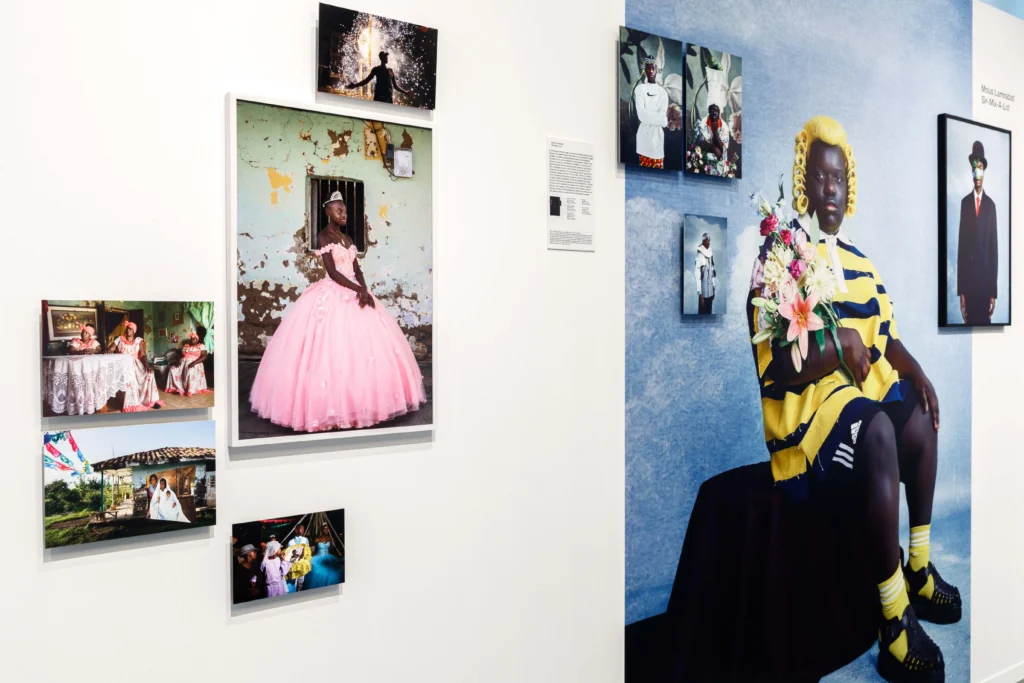
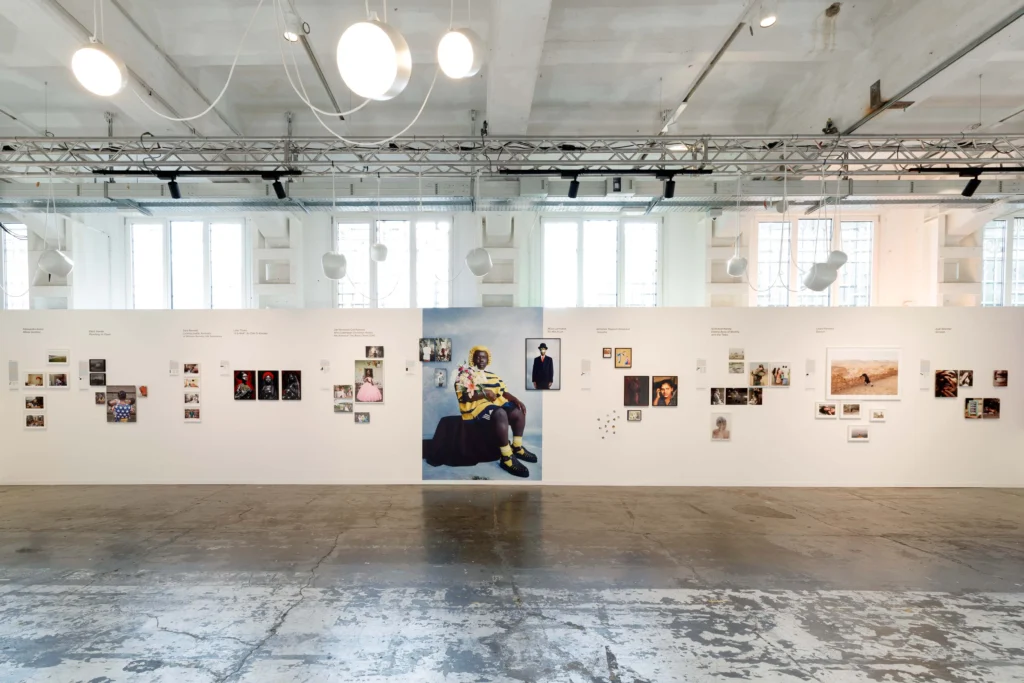
Photoville Festival 2022: The event opened the summer with an immersive hybrid experience—over 60 public art exhibitions, inspirational walking tours, thought-provoking panels, and hands-on workshops. My project was on view at Brooklyn Bridge Park – Pier 1 from June 4–26.
It was my first time exhibiting at Photoville, a milestone that filled me with pride and gratitude. Two years later, in 2025, I would return with my personal project B-Migrant, making this debut an unforgettable starting point in my journey with the festival.
Photo Vogue Festival 2021: For its 6th edition, titled REFRAMING HISTORY, Vogue wanted to explore the projects that have reclaimed an alternative, different way of telling a tale. From projects that reframes omitted, forgotten and overlooked historical figures to works that reclaims an idea of beauty that has been diminished, stereotyped or exoticised.
The exhibition featured 35 photographers in Milan, Italy, in November 2021, after an open call that received 24.913 images, 2.949 projects by 2.513 photographers from 98 different countries.